Agentic Development Practices for Startup Engineering Teams
How startups can build sustainable practices around AI agents before their edge decays.
Startups have a real edge in agentic development: small codebases, fast feedback loops, and almost no approval bureaucracy. That edge is structural. Most teams burn it anyway, treating agents like a faster autocomplete instead of building actual practices around them. Task design, autonomy limits, context, tooling, oversight: skip these, and the edge costs more the longer a team waits to build it.
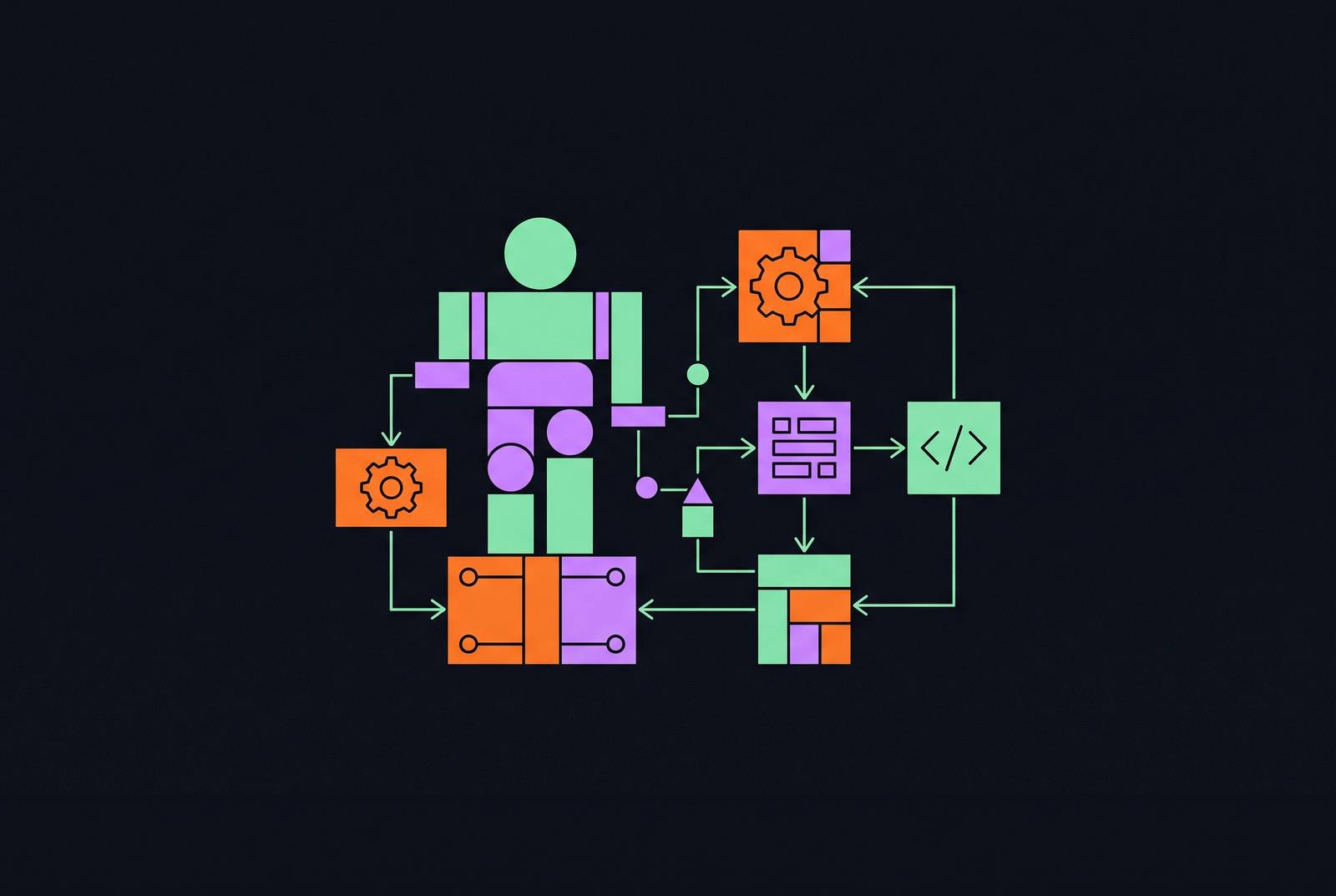
Start with what "agentic coding" actually means, because the term gets thrown around loosely. An agent plans a task, writes code, runs tests, reads the output, and decides what to do next, using real tools: a shell, a test runner, code search, version control. That's different from chat. It's different from autocomplete. The agent reacts to what it just observed and picks its next move, the same way a human engineer does when a test fails and they go looking for why.
Why do startups have an advantage here? Three structural reasons:
- Small, coherent codebases. An agent can read the whole thing instead of grazing the surface of a ten-year-old monorepo.
- Short feedback loops. Code, test, deploy, observe, repeat, fast enough that a team notices right away if an agent starts drifting off course.
- Fewer approval layers. No governance committee signs off before a team decides to give an agent more autonomy.
That advantage decays fast, though. Techniques that work fine on a small side project fall apart the moment they're pointed at a codebase that's grown up, accumulated history, and picked up a few hundred thousand more lines. Startups grow. Teams that skip good habits early inherit a mess later, and by then the mess is expensive to unlearn.
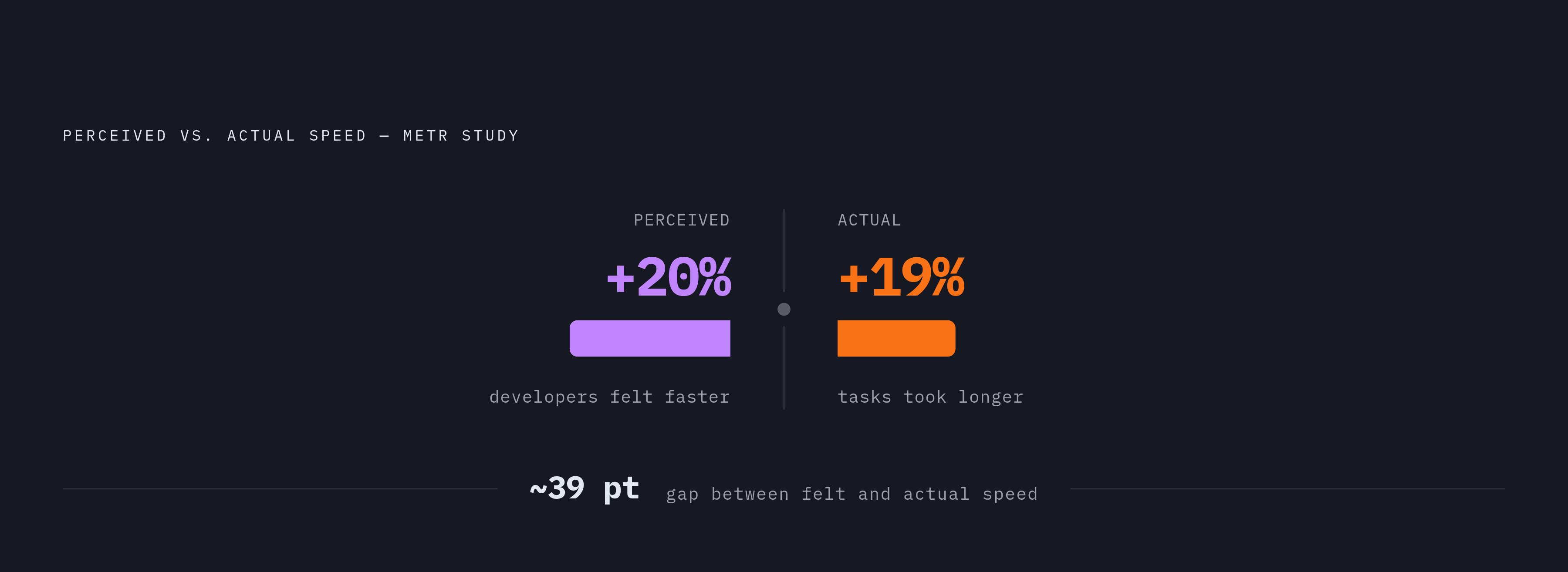
Most teams get one thing backwards: they trust their own sense of how fast the agent is making them go. A controlled study from METR found that experienced developers using AI tools took 19% longer to finish tasks, yet believed they'd worked 20% faster. That's not a rounding error. That's a nearly 40-point gap between felt speed and actual speed. Teams that don't measure outcomes directly will misjudge what's happening every time, either trusting agents with work they can't yet handle, or writing off the whole approach before it's had a fair shot.
How the agentic loop actually runs, and where it breaks for teams that don't plan for it
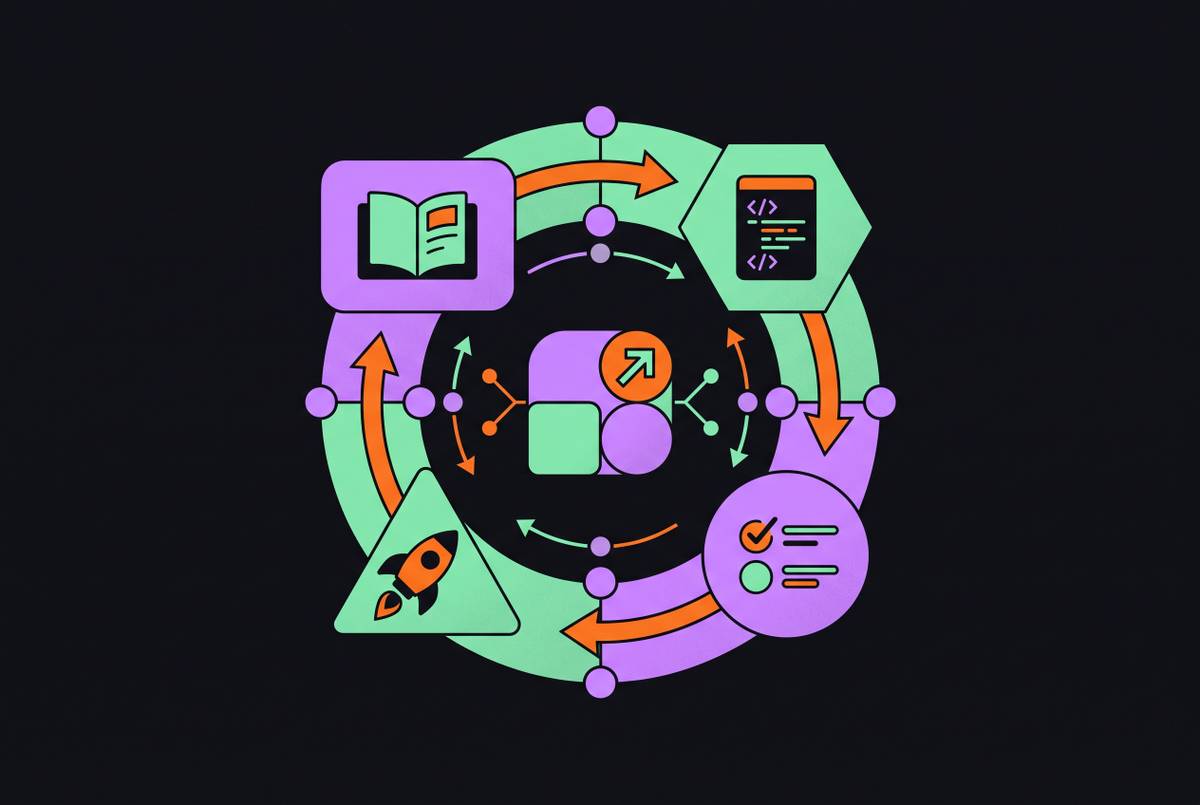
Every agentic system runs the same basic loop: prompt, gather context, plan, execute, test, refine, output. The "autonomous" part is the middle: the agent reads files, calls tools, runs commands, looks at what came back, and decides its next step on its own.
Context gathering is where most of the quality gets won or lost. An agent can only reason about the code it can actually see. If the retrieval step pulls up three relevant files but the real fix touches ten, the agent builds its whole plan around three files' worth of information. It won't ask what it's missing. It'll just plan with what it's got and sound confident doing it. That confidence is the trap. Nothing about the agent's tone tells anyone it's working from a partial picture.
This gets worse, not better, as a codebase grows and spans more services and repos. Retrieval quality directly affects how long an agent takes, how many times it has to retry, and what the whole task ends up costing.
Watch for the 80% cliff. Agents tend to nail the obvious, well-defined part of a task and stall out on the last stretch, usually the edge cases a careful human reviewer would catch and an AI just doesn't see. A 2026 benchmark from SonarSource found Opus 4.5 Thinking solving 83.6% of real engineering tasks, and the unsolved slice trended toward exactly this kind of failure: not wrong code, just incomplete reasoning about what "done" really means.
But the real number to worry about shows up somewhere else: sustained reasoning across many files. On the SWE-EVO benchmark, GPT-5 running with OpenHands scored 21%, compared to 65% on SWE-Bench Verified. That's not a small drop, that's a different task altogether. Single-file or narrow tasks are one thing. Sustained multi-file reasoning is another, and most real startup engineering work looks like the second kind, not the first.
None of this is a reason to distrust agents. It's a reason to design tasks around where the loop actually holds up, which is the next problem to solve.
Designing tasks that agents can complete rather than tasks that agents will approximate
Vibe coding and agentic coding get treated like synonyms. They're not. Vibe coding is a posture: trust the model, keep prompting until something that looks right comes out. Agentic coding is a structure: the agent runs in a loop with real tools, and a human checks the result against a clear definition of done. One of these has an owner for correctness. The other doesn't, and that gap is where most of the bad headlines about AI-written code actually come from.
Good task design is what turns agentic coding into something other than vibe coding with extra steps. A few rules hold up in practice:
- Say what "done" looks like, not how to get there. Agents plan better against an outcome than a procedure.
- Keep the scope small enough for the agent to actually retrieve. If a task needs reasoning across more code than the agent can pull in, it'll build a partial plan and run with it anyway.
- Give it something that proves the work is correct. A passing test suite. A green CI run. A diff that only touches the files it was supposed to touch.
- Split judgment calls from execution work. Making a structural decision and writing the work to match it are different skills. Agents are strong at the second one. Mixing both into one prompt weakens both.
Spec-driven development fits naturally into this structure. A developer writes the design doc first, the agent builds the code from that spec, and the human review checks the result against the spec instead of second-guessing every step along the way.
Measuring the right thing matters just as much as scoping the task right, and here's where a lot of teams are quietly lying to themselves. Lines of code generated or tasks kicked off don't tell anyone much. Any team still tracking those numbers is measuring what's easy to count, not what's true. What matters is how many changes actually survive: pass review, pass integration tests, pass security scanning, deploy cleanly, and run in production without anyone getting paged at 2am. Call that a production-qualified change. It's a far better yardstick than anything counted at generation time.
The difference between a good task and a bad one is stark once it's written out:
- Well-scoped: "Add rate limiting to the checkout endpoint. Tests must pass. Touch only
checkout/and its direct dependencies." - Poorly-scoped: "Improve the checkout flow." No way to check the work, no boundary on what files change, and the agent will end up making architectural calls nobody asked it to make.
Calibrating how much autonomy to give an agent at each stage of your team's maturity
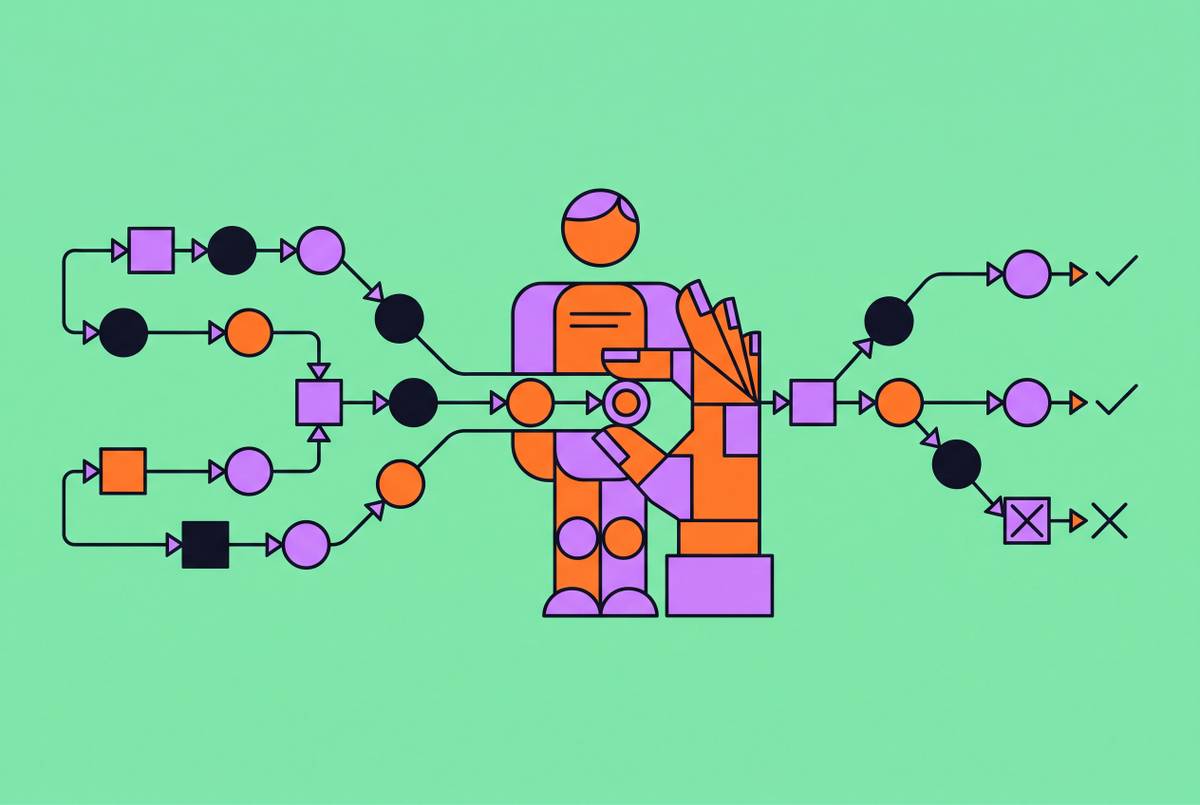
Autonomy is a gradient. It's a slider. On one end, an agent proposes a small, precise edit and a human applies it. On the other, it runs the whole task and opens a pull request with no one watching in real time. Where a task should sit on that slider depends on what the task touches, how well it's tested, and how much the team has already watched the agent behave in that part of the codebase.
Three modes:
- Supervised. The agent proposes, a human applies it. Right for core business logic or anything security-sensitive where test coverage is thin.
- Gated. The agent executes, but CI or a review step catches problems before merge. Right for well-tested modules with clean interfaces.
- Delegated. The agent executes and opens the PR on its own. Right for high-coverage, tightly bounded work: dependency bumps, test generation, documentation, places where a bad merge is cheap to catch and cheap to fix.
Managing this across a growing team eventually needs its own system, sometimes called a control plane: something that tracks which tasks get how much autonomy, sets the verification gates, and flags when something needs to be pulled back to a tighter setting. Think of it as the management layer sitting on top of the agents themselves, not a tool that writes code but one that decides how much rope each task gets.
A few things push that setting up or down:
- Test coverage. Gated and delegated modes only work if there's a reliable signal telling the team when something's actually broken.
- Codebase age and documentation. Recently written, well-documented code gives an agent good footing. Old, undocumented code degrades both retrieval and planning.
- How sensitive the domain is. Security, billing, and auth stay supervised longer, regardless of how good the test coverage looks.
Here's the part worth reading twice. The same METR research that found a 19% slowdown found the same developers hitting an 18% speedup in a follow-up study in early 2026. The tools got better, sure. But so did the developers' sense of when to hand something off and when to keep it close, and that second part is the one a team actually controls. Autonomy calibration is an ongoing adjustment. It's a choice a team keeps revisiting, the same way any engineer learns when to trust a junior teammate with something bigger.
Longer term, the shape of the work itself shifts. Agents start owning full tasks from spec to deployment, and the human's job moves from doing the work to specifying it clearly and checking that it landed right. Startups that get explicit about autonomy calibration early reach that point faster than larger companies weighed down by more process.
Building the context infrastructure agents need to stay coherent across your codebase
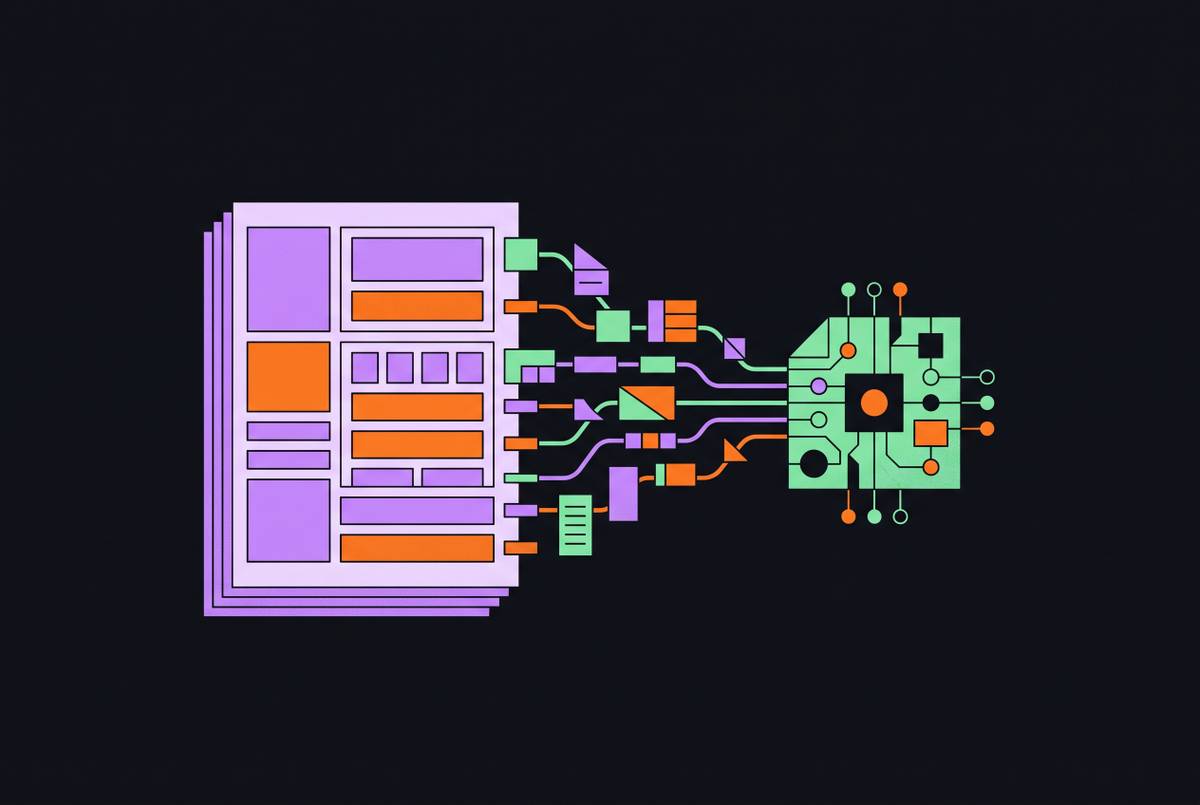
Context gathering decides output quality more than any other part of the loop. An agent can't reason about code it can't see, so what a team puts in front of it matters as much as which model or platform they're using. Maybe more.
The industry has mostly converged on the same idea: a memory file that lives in the repo and tells the agent what it needs to know about the project. Claude Code looks for CLAUDE.md. Codex and a handful of other tools look for AGENTS.md (Claude Code doesn't read AGENTS.md natively, so teams juggling multiple tools may need both). These aren't auto-generated fluff. They're architecture documents, and they should get written the way an onboarding doc for a new hire gets written: deliberately, and kept current.
What actually belongs in one of these files for a startup codebase:
- Who owns which module, and where the boundaries are.
- Conventions the linter doesn't catch: naming patterns, how errors get handled, logging standards.
- What's off-limits for agents right now: security-critical code, anything mid-refactor by a human.
- The reasoning behind past architectural decisions. An agent has no access to the Slack thread where the team argued about this three months ago.
Some platforms build structured maps of a codebase's dependencies and architecture to help agents reason about large repos more directly. The specific feature varies by tool, but the underlying idea holds for any team: the more structure a team gives an agent about how the codebase fits together, the fewer wrong guesses it makes.
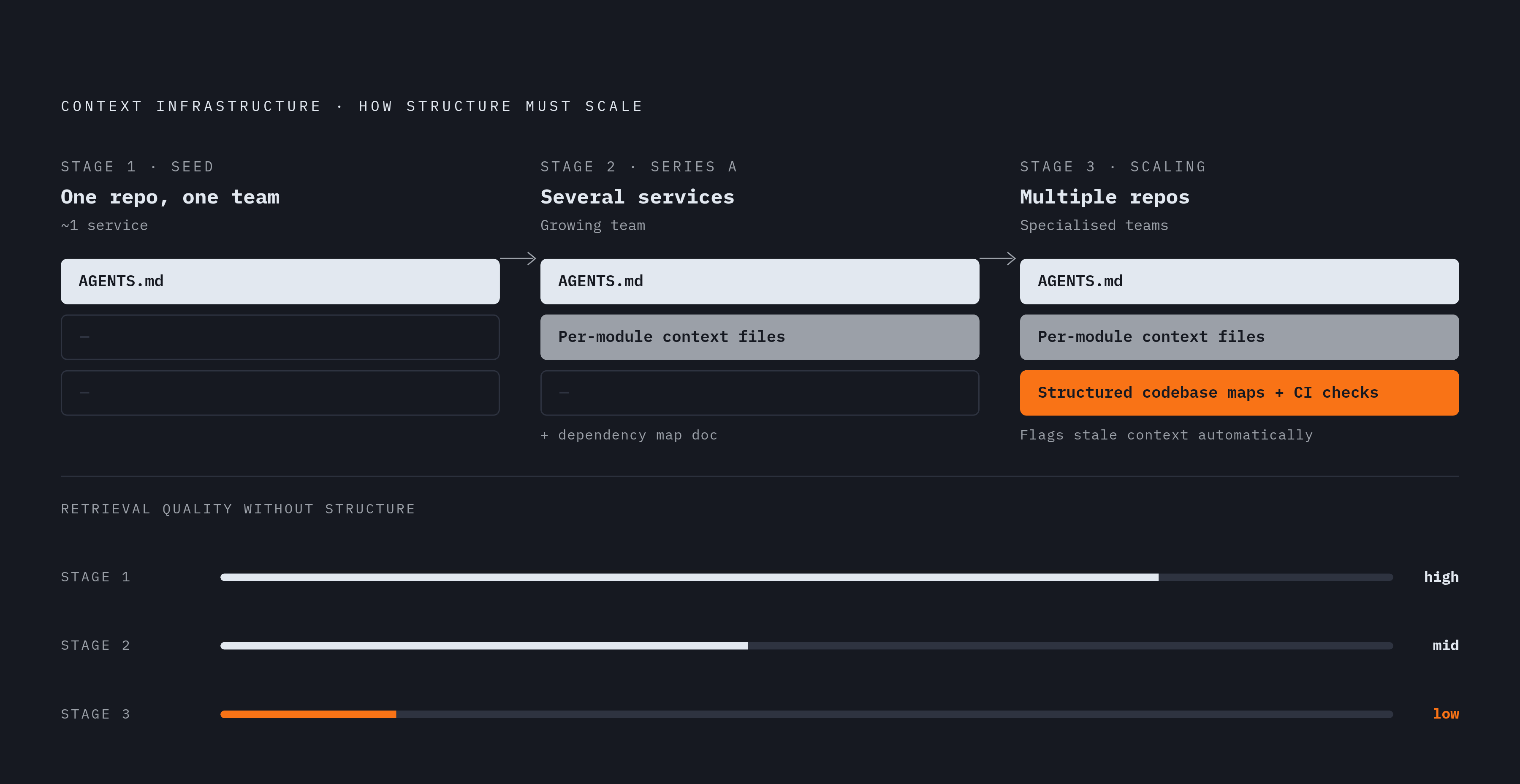
Retrieval quality gets worse, not better, as a codebase scales, so it's worth checking on this before it turns into an expensive problem. A rough guide by stage:
- Seed stage, one repo, one team: a single, well-kept
AGENTS.mdcovers it. - Series A, several services, growing team: per-module context files, plus one document mapping how everything depends on everything else.
- Scaling, multiple repos, specialized teams: structured maps of the codebase and some automated check in CI that flags when context files go stale.
Choosing the right tool for each layer of the agentic stack without over-investing in any one platform
Despite different branding, most leading agentic platforms share the same underlying pieces: memory files, tools or "skills," long-running execution, background agents, and some way to hand off work to sub-agents. The interface differs. The architecture underneath mostly doesn't, and that's the fact most tool comparisons bury.
Picking one platform and stopping the search there is the wrong instinct. The strongest developers right now aren't loyal to a single tool. They tend to run something like two, with clearly different jobs: one for daily work, and a separate terminal-based agent for the bigger, messier, multi-file tasks. That split isn't an accident. Each tool is doing what it's actually good at.
Three broad categories, and what each is built for:
- Terminal-first agents (tools like Claude Code, Codex CLI, and similar command-line agents): these live in the command line, read the repo directly, run shell commands, edit files, run tests, and chain steps together. Most flexible, most hackable, best fit for complex multi-file work and for engineers who already spend their day in a terminal.
- Editor-integrated agents: these combine the responsiveness of editing locally with cloud agents that can run longer tasks or several sub-agents in parallel. Good for daily editing, in-context review, and smaller targeted changes. Some editor-integrated tools include features meant to help an agent reason about dependencies across a large repo.
- Cloud-autonomous agents (Devin from Cognition Labs is the clearest example): these run entirely in the cloud and can work on several tasks at once, each assigned independently. This is closer to assigning work to a team member than assisting someone at a keyboard. Best suited to tasks that are well-scoped enough to hand off fully, delegated mode, not supervised mode.
Model choice is a separate decision from tool choice, and it's worth not overthinking it, because the numbers argue against overthinking it. On real-world coding tasks, the gap between the best and worst frontier models, per SWE-Bench results, is under 8%. That means the platform wrapped around the model, how it gathers context, how it verifies its own work, usually matters more than which specific model is doing the reasoning.
A practical way to think about cost versus capability:
- Frontier-class models (Claude Opus, GPT-5, Gemini Ultra tier): reserved for genuinely hard reasoning and complex refactors.
- Mid-tier models: for repetitive, high-volume work like test generation or documentation updates, these get 80 to 90% of frontier quality at a fraction of the cost and several times the speed.
- Evaluation on real tasks: pull actual tickets from the backlog, not abstract benchmarks, and score models on pass rate, latency, cost, and security. Repeat this every quarter as new models come out, because the ranking shifts.
For teams that need to self-host or watch costs closely, open models are a real option, not a compromise. DeepSeek V3 is available under an MIT license for self-hosting, or through an API at a low per-token cost. Gemini 2.5 Flash sits in a similar low-cost bracket. Neither replaces a frontier model for the hardest problems, but both hold up well for high-volume, lower-stakes work.
Integrating agents into the workflows where startup engineering already happens
Agents should show up where developers already work: the editor, the terminal, Slack, GitHub. Not in some separate tool that forces someone to re-explain the whole problem from scratch.
GitHub and CI/CD are the natural place for verification to happen. Agents can already inspect a repo, run commands, call other tools, and open pull requests as part of a normal CI/CD flow. Security scanning and automated vulnerability checks with contextual fix suggestions are increasingly built right into that same pipeline. Large-scale refactors and dependency upgrades, the kind of tedious cleanup that piles up fast in an early-stage codebase, fit this especially well, since they're bounded, well-tested, and easy to verify. The pull request stays the actual review gate. Every agent output gets treated as a diff that needs a human's eyes, not a finished product, and that's the line separating agentic coding from vibe coding with better production values.
Slack is turning into a real delegation surface too. Claude Code's Slack integration, announced December 8, 2025, lets developers hand off coding tasks straight from a Slack thread, the same place where the context for the bug or the feature request already lives. Bug investigation, multi-file refactors, PR reviews, test generation, all of it kicked off from the conversation where the problem was first described. For a small team, that's a meaningful saving: nobody has to stop, leave Slack, and re-type the whole problem into a different tool.
The terminal remains the power-user layer. Terminal-first agents are still the most flexible option out there, and experienced engineers can wire them straight into existing build, test, and deploy scripts without touching their normal workflow.
That same week, That same period also saw Windsurf announce new pricing and GitHub roll out new Copilot capabilities, landing close enough together to suggest a broader shift: the whole industry moving toward tools built for teams, not solo use. Startup teams should expect this surface to keep expanding fast, and plan integration in stages rather than trying to adopt everything on day one.
A sensible order to build this out:
- Start: an agent in the editor for daily work, CI as the check on everything it produces.
- Expand: a terminal agent for the bigger, multi-file jobs, assigned by a clear written description.
- Mature: Slack-based delegation for tasks where the context already lives in a conversation, plus a standing PR review agent running as a normal step in CI.
Oversight practices that keep agents productive
None of the above matters if nobody's watching what the agent actually did. Oversight is the mechanism that makes speed sustainable. It's what keeps the speed from turning into rework six weeks later, and that distinction is worth holding onto every time a team feels tempted to skip a review step.
A few habits worth building in early:
- Review the diff, not the description. An agent's summary of what it did is not proof of what it did. Read the actual change.
- Track outcomes, not activity. How many changes make it through review, tests, and production without incident matters more than how many tasks were started.
- Watch for the 80% cliff on every task, not just the risky ones. The part that's missing is often the part nobody thought to ask for.
- Recalibrate autonomy based on what actually happened, not what was hoped for. A task that fails in gated mode should move back to supervised, not get a second chance at the same setting.
- Keep context files current. A stale
AGENTS.mdis worse than none, because it tells the agent something that's no longer true.
None of this is about distrust. Building the same kind of feedback loop with an agent that a manager builds with any new hire means setting clear expectations, having a way to check the work, and staying willing to adjust the amount of independence based on what actually gets delivered. Startups that build these habits early get to keep the structural edge they started with. The ones that skip it end up doing the same work twice: once by the agent, and once by a human undoing what the agent got wrong.