Visual Regression Testing in Agentic Frontend Workflows
Agents ship code faster than QA can visually review it.
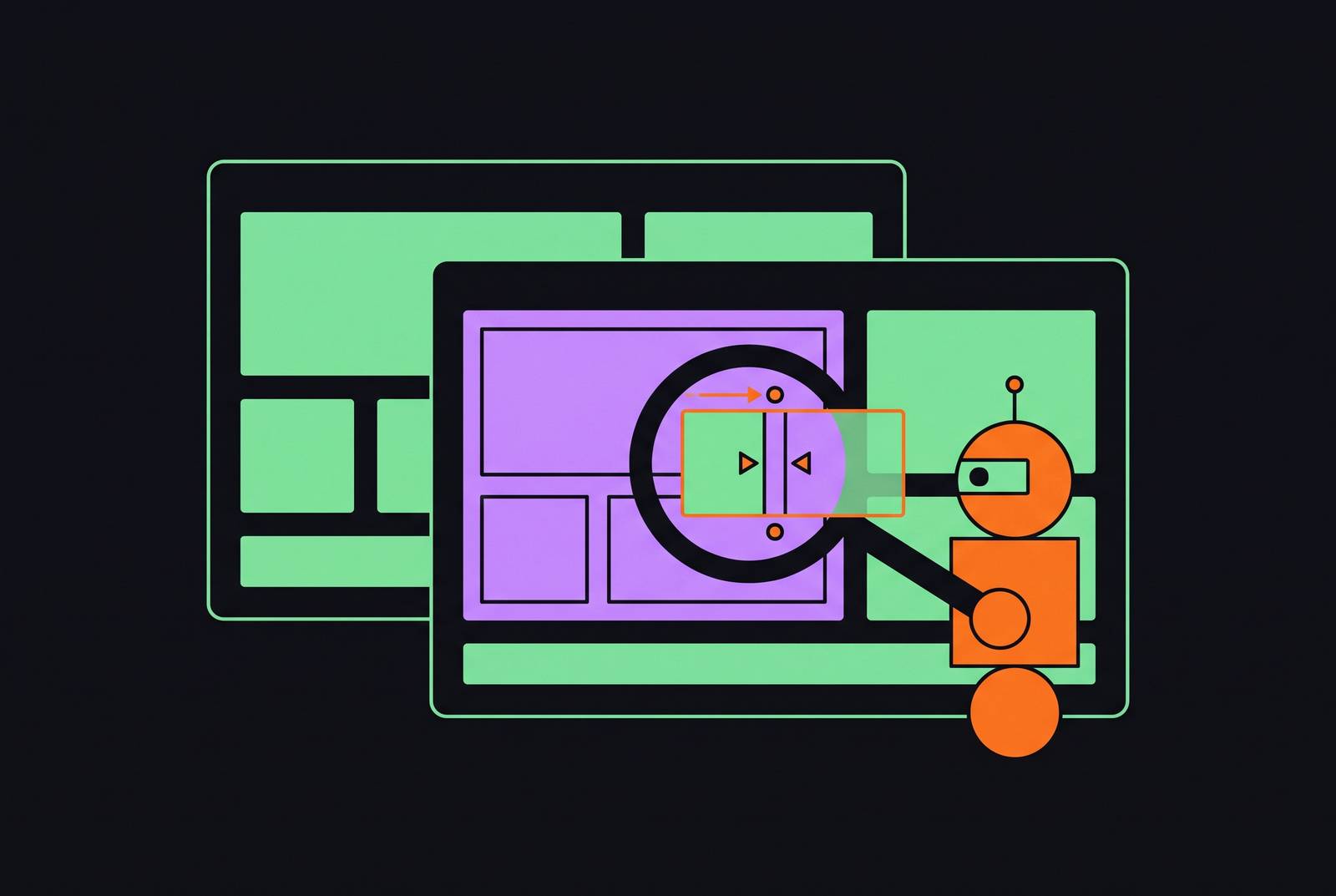
Visual regression testing is the discipline that catches what functional tests can't: a UI that looks broken even though every check passed. This piece looks at why that gap exists, why agentic coding makes it worse in 2026, and how engineers are starting to close it.
Why functional tests cannot verify what the eye sees
Picture what an agent actually checks when it runs a test suite. It confirms a button exists. It confirms the button can be clicked. It confirms the click lands on the right page. None of that tells anyone whether the button looks right. A build can go fully green while the rendered interface has quietly gotten worse, because the test was never asked to look at it in the first place.
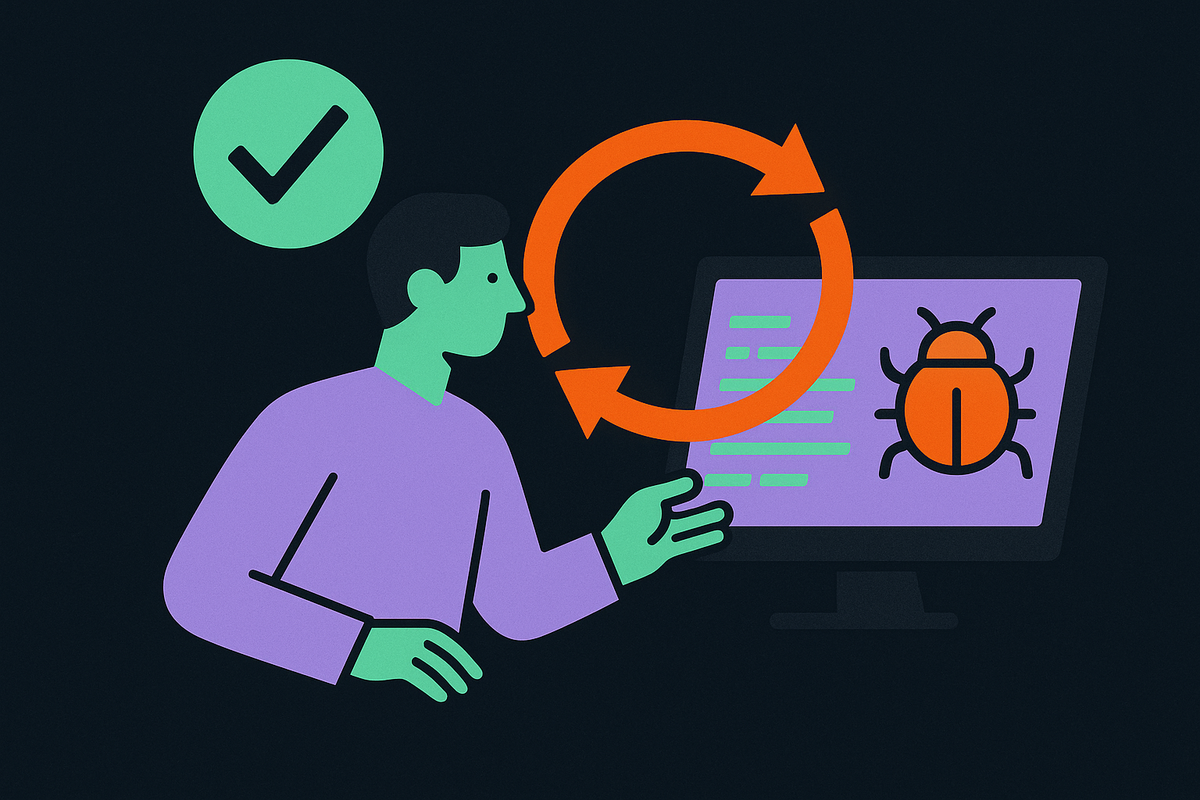
A CSS change overlays a button with another element, or truncates its label, or shoves it outside its grid entirely, and the functional test still passes because the button is clickable and routes to the expected page. The person who shipped that change gets a green checkmark and a broken page at the same time.
A login flow makes the problem easiest to see. Authentication succeeds. The dashboard URL loads. By every measure the test suite checks, the build is healthy. Meanwhile the submit button's contrast has shifted, or its label has changed, or it's moved somewhere nobody asked it to move, and nothing in the test was written to notice. The gap isn't a flaw in how the agent was built. Functional checks and visual checks are answering two different questions, and an agent running only the first kind will never stumble into the second by accident.
How "AI testing" became three different things engineers conflate
The phrase "AI testing" gets used as if it describes one thing. It actually covers at least three separate jobs, and mixing them up is how teams end up thinking they have visual coverage when they don't.
The first job is writing test logic. Playwright's Test Agents, for instance, include a planner that lays out a test plan, a generator that turns that plan into working Playwright code, and a healer that fixes tests when they break. That trio produces test coverage, and it's a genuinely useful piece of machinery, but it writes functional tests. It is not looking at pixels.
The second job is keeping those tests running without constant babysitting, through things like adaptive locators and self-healing selectors that cut down on maintenance work. That's valuable too, and it's easy to mistake for visual awareness because it involves the word "visual" somewhere in a vendor's marketing. It isn't: adaptive locators and self-healing selectors change how reliably a test runs, not what the test is checking for.
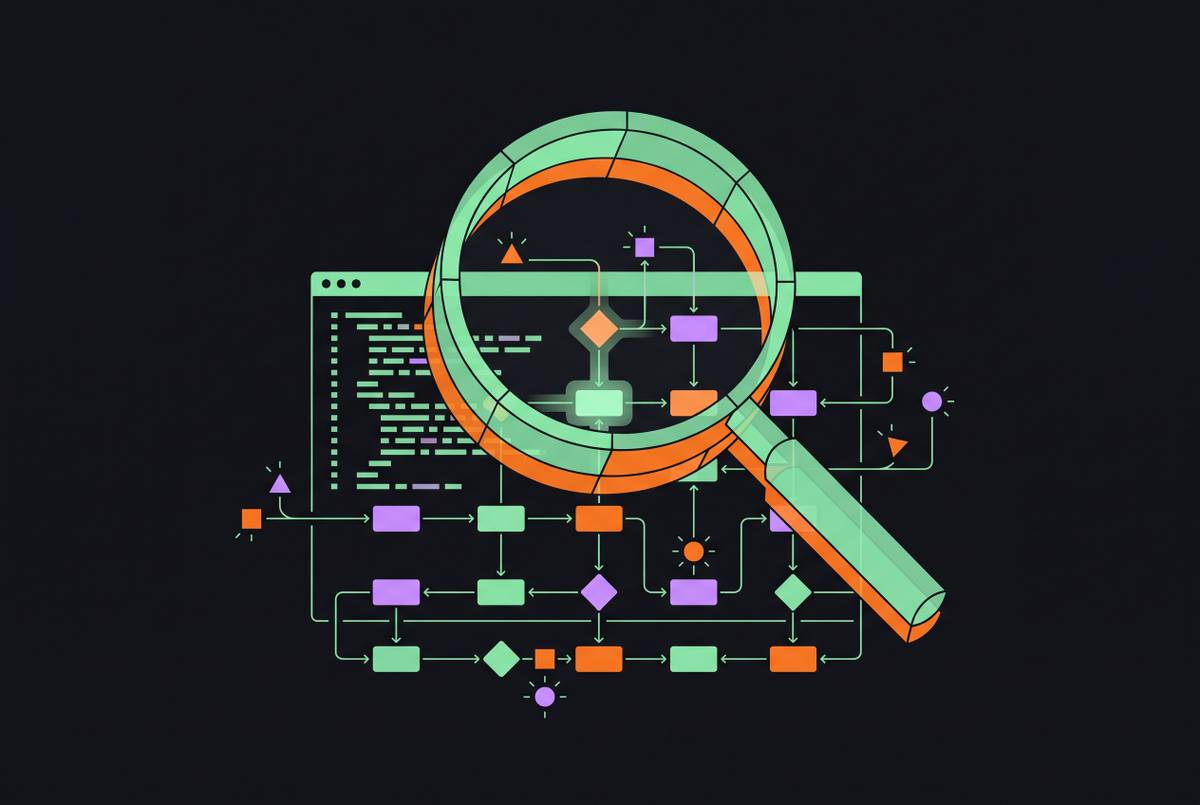
The third job, interpreting what actually got rendered, is a different layer entirely: screenshot comparison against a baseline, AI filtering out noise, plain-language explanations of what changed. Visual testing is a validation layer sitting on top of whichever testing approach is already running the workflow, not a fourth execution model competing with the others. Even Playwright, a tool most engineers associate with functional test generation, ships a toHaveScreenshot() method for exactly this purpose. The fact that Playwright can generate tests and also take screenshots doesn't collapse the distinction. Test generation is agentic; screenshot comparison is a separate discipline that happens to run on the same tool. Applitools states the risk: coding assistants can generate functional test code all day while layout regressions, component misalignment, and UI shifts sail through every code-level check untouched. A team that adopts an AI coding assistant and assumes visual coverage came bundled in has made exactly the mistake this section is describing.
Agentic velocity and the visual gap in 2026
The gap between functional and visual testing isn't new, but how fast code moves through it now that agents, not just people, are writing and shipping it, is. More UI surface area changes per sprint than any human review process can realistically track.
Every major AI lab now ships its own agent framework. OpenAI has its Agents SDK, Google has ADK, Anthropic has its own Agent SDK, Microsoft has its Agent Framework (the successor to Semantic Kernel and AutoGen), and HuggingFace has Claude Smolagents. That proliferation has lowered the bar for standing up an agent that ships code into production. More code is moving with less friction than at any point before.
QA hasn't scaled to match. A Testlio industry survey found that a majority of QA leads reported a meaningful increase in their test backlog since their organization started using AI coding tools. More code arrives at the QA stage without more people or capacity to review it, and the result is a pipeline that backs up: features pile up, release trains slip, and the speed agents were supposed to deliver turns invisible to the business that paid for it. Separately, research on AI-generated code has found a large share of it contains security vulnerabilities, and that risk stacks directly on top of the visual one: an autonomous agent can push code that's both functionally insecure and visually broken through a pipeline that shows green the whole way.
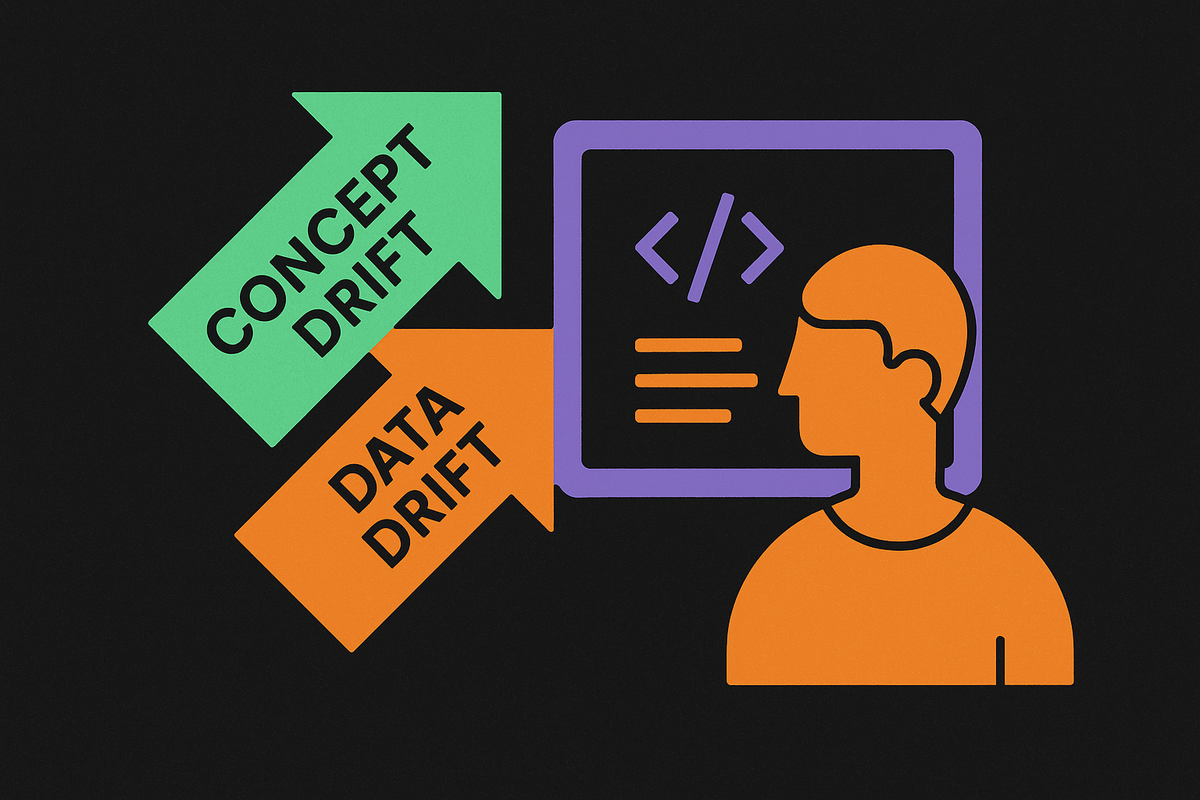
There's a second wrinkle specific to agentic systems: non-determinism. Autonomous agents don't always execute the same way twice, because of timing differences, environmental quirks, and legitimate alternate paths through the same workflow. A loading spinner that shows up in one run and not in the next is normal variation, not a bug. But a naive pixel-diff tool doesn't know that, and it will flag it as a failure anyway, which sets up the exact problem the next section covers.
The false-positive trap that makes snapshot testing feel useless
Most teams that give up on visual regression testing don't give up because the approach is broken. They give up because uncurated pixel diffs trained them to stop trusting the alerts.
A visual diff shows up, a reviewer looks at it, decides it's fine, and approves it. The same kind of diff appears again the next sprint, gets approved again, and again after that. After enough rounds of this, the review step stops functioning as a review. It becomes a box someone clicks without looking, because the tool has cried wolf often enough that nobody believes it anymore.
The sources of that noise are almost always the same handful of things: animation that hasn't finished rendering when the screenshot fires, fonts that load at slightly different speeds, content that changes because it's dynamic by design. None of that points to visual testing being fundamentally unstable. Playwright's own documentation says as much, warning that operating system, browser version, settings, hardware, whether a laptop is on battery or plugged in, and headless mode can all alter how a page renders. Those are configuration issues to fix, not evidence the whole approach doesn't work.
Traditional visual regression testing compares screenshots one at a time, in isolation, with no understanding of the flow they came from or what they're supposed to mean. A tool working that way can't tell a loading screen that's a normal, acceptable variation from a loading screen that signals something actually broke. There are two ways out: fix the specific source of flakiness at its root, or replace the brittle pixel-equality check at that step with something that reasons about what's actually on the screen instead of comparing it pixel-for-pixel. That second option is where the newer tools in this space are headed.
Visual regression platforms in 2026
Applitools, Percy, and Chromatic all aim at the same target, cutting visual noise down to a signal a reviewer can actually trust and posting it directly on a pull request, but they've built toward that goal differently and they're at different points in how mature their approach is.
Applitools cuts noisy differences down using what it calls Dynamic Match Level and a feature called Regions Only, and it connects its Eyes product to coding assistants through MCP. Of the three, it has the longest track record with visual AI and the most developed semantic understanding of what's changed on a page.
Percy takes a comparable approach with its own Visual AI, a noise-filtering feature called Intelli-ignore, plain-language review summaries, and information meant to point a reviewer at the actual root cause of a diff rather than just the diff itself. Percy's MCP integration launched in June 2025, and it added an AI Visual Review Agent in October 2025. The underlying model is younger than Applitools', but the gap between them has narrowed in a meaningful way.
Chromatic filters out unstable visual tests and publishes Storybook context through MCP, with its Storybook MCP servers released in March 2026. Chromatic ships no AI layer for interpreting diffs. Where all three line up is in their CI integrations. Each connects to GitHub Actions, GitLab CI, Jenkins, CircleCI, and Bitbucket Pipelines, and each posts its review status directly as a check on the pull or merge request.
One newer entrant works on a different model. Autonoma runs as an agentic end-to-end testing platform rather than a dedicated pixel-diff tool. An AI agent exercises the application on every pull request and reports what it found broken, using vision models to locate elements from plain-language descriptions instead of relying on CSS selectors. Tests are written in plain Markdown with YAML frontmatter, which puts writing them within reach of people who've never written a line of test code. It's a genuinely different category from snapshot comparison, not a fourth competitor doing the same thing as the other three.
Playwright is often the engine actually running the browser, and that choice shapes what the tools built on top of it can capture. It gives the runner lossless PNG baselines (with an option for lossless WebP), plus aria snapshots captured in traces and screencast receipts. Percy, Applitools, and Chromatic each built their own layer on top of that raw capability to decide which diffs are worth a human's attention. Agent plugins, including Playwright's own generator agent and community skill packs like testdino-hq/playwright-skill, can add screenshot and aria snapshot assertions onto existing tests. None of them can judge whether the very first screenshot captured was actually correct. That judgment still has to come from somewhere else.
The newer agentic approach: reasoning about rendered state instead of diffing pixels
Snapshot comparison needs something to compare against. That works fine for a page that's existed for months and has a stable, known-good baseline. It falls apart for a brand-new flow, an A/B test variant nobody's seen before, or a dashboard that's personalized differently for every user. In those cases, there's nothing to diff against, and a different kind of check is more useful: one that reasons about whether a page looks correct rather than whether it matches something that came before.
That's a real shift in what a visual check is doing. Instead of running as a separate suite after the functional tests pass, it becomes an assertion type an agent can reach for mid-flow, the same way it reaches for a functional assertion. The question changes from "are these pixels identical to last week" to something closer to "does this page have the elements it should, placed roughly where they belong, saying something that makes sense at this point in the flow."
Research backs up that this kind of reasoning can work with surprisingly little data. An algorithm built by Microsoft and the University of Washington learns what correct behavior looks like from as few as 2 to 10 passing execution traces, then checks new executions against that learned model. It combines dominator analysis (mapping which states in an execution are essential versus optional) with a multimodal LLM's semantic understanding, and with as few as 3 training traces it reaches high accuracy at catching both real product bugs and false successes. The reason that matters for agentic pipelines specifically: it tolerates acceptable variation instead of flagging it. A loading screen that shows up in one run and not another gets treated as an optional state, not an automatic failure.
A separate research effort points at an even richer version of the same idea. EmbeWebAgent, from IBM Research Europe with a co-author from the University of Oxford, embeds an agent directly into an existing UI using curated ARIA labels and a per-page registry of functions, rather than having the agent look at a screenshot from the outside. That gives the agent application-level access instead of pixel-level guessing, and it holds up better for multi-step visual and behavioral checks in enterprise settings.
None of this replaces snapshot baselines where those baselines are stable and actually mean something. It fills the gap where a baseline doesn't exist yet, can't be trusted, or costs more to maintain than it's worth.
MCP as the integration layer that brings visual signals into the agent's own workflow
A visual check only helps if the agent that's writing and fixing code can actually see it. That's the gap MCP (Model Context Protocol) is starting to close, by making visual regression results something an agent consumes inline rather than a report a person reads afterward in a separate dashboard.
Applitools connects its Eyes product to coding assistants through MCP, which puts visual verification inside the same workflow where the assistant is already generating functional test code. A layout regression that would have sailed through every code-level check now becomes something the agent can actually see before it moves on.
Chromatic's Storybook MCP servers, released in March 2026, publish a component's visual context directly to a coding assistant working on that component, so it can see the baseline state it's meant to preserve. A browser test can pass while the interface underneath it is still visually wrong, and the MCP server is specifically what surfaces that mismatch where the agent can act on it. Percy shipped a comparable MCP integration in late 2025, turning its natural-language review summaries and root-cause detail into something the agent can read and reason about, instead of something that only shows up on a dashboard a person has to check manually.
The pattern across all three is the same: visual regression stops working as a gate that only fires after functional tests already passed, and starts working as one more kind of assertion the agent can call, read, and respond to in the middle of its own loop. Routing visual signal through MCP means it arrives in the same place the agent already works, instead of a separate tool someone has to remember to check. The same dial that controls how much an agent is allowed to do on its own also ends up controlling how much visual signal it's actually using.
CI pipeline gating: where to place visual checks without strangling the build
None of this is useful if it's bolted onto a CI pipeline that's already slow, because a visual check added without thought will eat the exact speed gains agents were supposed to deliver. The real decision is where in the pipeline visual checks run and how often, not whether to add them.
Running a full visual comparison on every single commit sounds thorough and is usually a mistake, because most commits don't touch anything a human eye would notice. Smart gating means picking the moments that actually carry visual risk, a pull request that touches CSS or a component library, a merge into a release branch, a deploy to staging, and reserving the full check for those, while letting routine commits move through without waiting on a screenshot comparison that has nothing meaningful to catch. Whether visual regression testing becomes a trusted part of the pipeline or one more slow step engineers learn to route around depends on that architectural decision.
Sources
- AI Testing Tools 2026: 12 Compared by How They Really Work
- Learning Correct Behavior from Examples: Validating Sequential Execution in Autonomous Agents
- Refonte Learning : Visual Regression Testing Catches What AI Test Agents Miss in 2026
- EmbeWebAgent: Embedding Web Agents into Any Customized UI
- Visual Regression Testing Tools Compared: 6 Options for Teams Shipping AI-Generated UI