AI Coding Agents for Frontend vs Backend Tasks
AI agents excel at backend work but struggle with frontend tasks that require visual judgment.
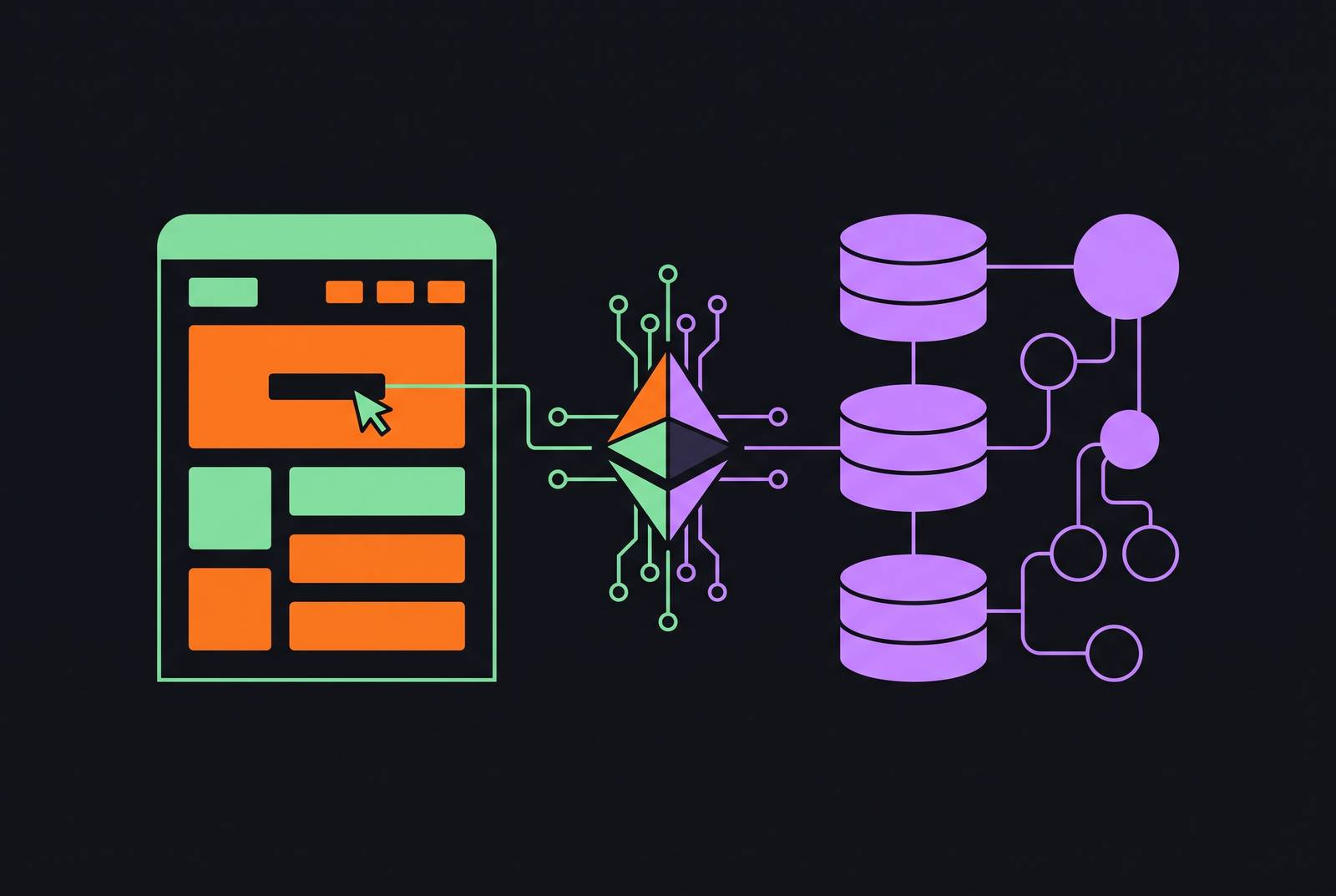
AI coding agents are closer to a contractor who can frame a house perfectly but struggles when you ask them to pick the right shade of white for the trim. Backend work gives an agent a yes-or-no question: does the API return the right JSON? Does the test pass? Does the migration run clean? Frontend work gives an agent a question that only a person can fully answer: does this look right, and does it feel right to someone clicking around on a laptop at 1pm versus a phone at a weird angle?
That split is baked into what frontend work actually is, not a bug that a smarter model fixes next quarter. Part of the acceptance criteria is how a thing looks and feels to a human being, and no amount of additional training data changes the fact that "looks right" is a judgment call, not a boolean.
Research studying experienced developers using agents backs this up directly. When developers talked about agents handling UI, HTML, and CSS, the sentiment split roughly 9 to 4, positive but nowhere near unanimous. Some developers were happy with how agents handled layout. Others ran into the opposite experience: small UI details that weren't quite right and took real time to track down and fix. That same complaint barely appeared in backend feedback.
One developer in the study tried, repeatedly, to get an agent to build an animated web banner. The agent kept producing output, and the output kept missing the mark visually. No amount of re-prompting closed the gap, because the gap wasn't a wording problem. It was a seeing problem. The agent couldn't look at the banner the way the developer could, so it couldn't know it was wrong in the way the developer meant.
Why backend tasks fit agentic execution
Backend tasks hand an agent the two things it actually needs to succeed: a precise spec and a machine-readable verdict on whether it nailed the job. Bug fixes tied to a specific error message, features built from a detailed spec, dependency upgrades, test generation, refactors, these all share one trait. The definition of "done" is unambiguous, and something other than a human can check it.
This matters because the agentic loop itself is built for exactly that kind of checking. An agent inspects the codebase, forms a plan, edits files, runs the tests, reads the failures, revises, and repeats. Every single step in that loop produces output a machine can evaluate. No human has to look at a screen and decide if something feels off. The test either passes or it doesn't.
The same research on experienced developers found sentiment toward agents ran generally positive, and the enthusiasm clustered specifically around well-described, straightforward tasks. A good example from that research: a request like "add rate limiting to this API and update the tests." An agent can inspect the middleware, find the relevant endpoints, read how the existing tests are structured, make changes across however many files that requires, run the full suite, and hand back a diff. Start to finish, no human has to step in.
Platforms that embed agents directly into the development environment are particularly well-suited to this kind of backend workflow. The agent's core loop (inspect codebase, plan edits, run tests, diagnose failures, revise) maps cleanly onto what the development environment already tracks. There's no context switching required, so the agent can operate across multiple files and test suites on its own.
Large codebases add another layer where capable models show a real edge: tracking how a change in one module ripples into behavior somewhere else is exactly the kind of structural reasoning backend work rewards. None of this means agents are good at everything backend-related. Asking an agent to design a brand-new system architecture from nothing, or handing it requirements that are genuinely vague, shrinks the advantage fast. The leverage lives in execution against a defined spec, not in open-ended design decisions.
Where frontend agent performance holds up and breaks down
Frontend work isn't a weak spot for agents so much as a split one. Independent teams report that AI coding assistants can cut frontend development time by up to 40%, which is a serious number. The leverage just isn't spread evenly. It concentrates hard in construction and prototyping, and it thins out fast once the work turns into fine-grained visual polish.
Agents do strong, reliable work scaffolding component trees, generating markup that's actually accessible, turning a wireframe or a screenshot into working code, keeping Tailwind class composition consistent, and producing a responsive layout structure that holds up across screen sizes. Handing an agent a rough sketch and asking for a working first pass makes it earn its keep.
Ask for precision instead of structure, and the story changes. Pixel-accurate spacing, animation timing, the subtler corners of CSS cascade behavior, how focus states render at an odd viewport width, these all need someone who can actually see the rendered result. An agent reading files alone can't.
The runtime context gap shows up concretely in something as simple as source code that might say p-4 md:p-8. That tells you only what was written in the source. The browser knows the real, computed padding at the current viewport, with the actual DOM state loaded. An agent working only from source files is working from inference. A developer looking at the rendered page is working from evidence. On anything involving visual correctness, evidence beats inference every time.
Design systems raise the stakes further. An agent that doesn't already know which components exist in a codebase won't reuse them. It'll build new ones that duplicate what's already there, quietly, one PR at a time, until the codebase is carrying two component libraries that do the same job. That's a drift problem, and it compounds the longer it goes unchecked.
Prototyping is where the frontend gains are most visible, because the loop there, prompt, look at it, refine, is fast enough that some visual sloppiness is fine. The developer is watching every step and correcting as they go. Production UI work asks for more: accessibility has to hold up, responsive behavior has to hold up across devices, the design system has to stay consistent, and focus management has to work for people using a keyboard instead of a mouse. All of that calls for more human-in-the-loop verification than the backend equivalent ever needs.
Framework choice shifts the odds too. React and Next.js show up constantly in training data, so agents carry stronger built-in knowledge of their conventions. That reduces the inference gap specifically on construction tasks, though it does nothing to close the gap on fine visual judgment.
On frontend work generally, agents do their best work on the structural layer: scaffolding, responsive layout, design-system consistency. The runtime context gap means a human still has to close the loop on how things actually render, and agentic tools built with that split in mind let developers toggle between autonomous scaffolding and hands-on refinement for the details that need eyes on them.
The agentic feedback loop in frontend versus backend
How much a developer can trust an agent to run unsupervised comes down to one question: can the agent tell, on its own, whether it got the job right? Backend work answers that question structurally well. Frontend work doesn't, and the difference shapes how much rope you should give an agent on each.
The backend loop goes like this: the agent edits code, runs the tests, reads pass or fail, diagnoses whatever broke, revises, and repeats. Every link in that chain is something a machine can check. The agent never needs a human to tell it whether it succeeded.
The frontend loop breaks somewhere in the middle. The agent edits code, the build passes, and the visual output technically exists, but the agent can't actually evaluate it without rendering it and looking. Someone has to take what's wrong in the browser and translate that back into instructions the agent can act on.
Silent failures are the risk underneath all agentic work, frontend or backend: code that compiles, passes its surface checks, and still does the wrong thing. On the backend, test coverage usually catches this before it ships. On the frontend, it often takes a human actually looking at the page to notice the regression.
Adding explicit verification steps closes a good chunk of that gap on frontend work: human review of the rendered output, screenshot comparisons, accessibility checks. Skipping those steps risks shipping something that's technically correct and still wrong in a way users will notice. Building in that kind of verification has been shown to improve agentic task success rates by 15.6%, which is a meaningful jump for a fairly cheap addition to the workflow.
Experienced developers in the Cornell and UC San Diego research handled this the same way across the board: plan before implementing, and check everything the agent produces. They didn't vibe code and hope for the best. They stayed in control at the evaluation step, and that control matters more on frontend work specifically, since the machine can't finish that evaluation on its own.
Backend tasks can often run long and autonomous, with review saved for the end, a diff or a pull request to look over once. Frontend tasks do better with shorter autonomous runs broken up by visual checkpoints along the way. Running an agent for an hour on a UI feature with no check-in doesn't save time. You're setting up a bigger cleanup later.
Model choice across frontend and backend task fit
Developers haven't split model choice by frontend and backend out of habit or brand loyalty. They've done it because different models carry different strengths, and those strengths line up with what each domain actually demands.
For agentic coding, meaning autonomous multi-step work like writing a feature, running tests, fixing what breaks, and submitting a PR, GPT-5.5 via Codex led the Terminal-Bench benchmark, per buildmvpfast's model guide. That's a backend-shaped benchmark almost by design: long chains of machine-verifiable steps, which is exactly the kind of task backend work hands an agent.
A full-stack mobile project shows how this plays out in practice: one team used Opus 4.8 for the UI layer and GPT-5.5 for server logic and API design. Neither model was doing the other's job. Each one was handling the part of the stack that matched what it's actually good at.
Locking into one model for every task, regardless of whether that task is frontend or backend, leaves real performance on the table. The more productive approach treats model choice as a decision made per task, not per project.
Cursor's approach, giving developers open access to whichever model fits the task, regardless of which company built it, reflects this directly. A split problem calls for flexibility as the answer, not a single model asked to be good at everything.
Reusable agent configuration as a way to encode domain-specific knowledge
A lot of the gap between an agent that helps and an agent that gets in the way comes down to one thing: the quality of the context it's given. Reusable configuration files are the practical way to close that gap, on frontend and backend work alike.
Context engineering has quietly become the core skill of working with agents well. An agent is only as useful as the problem statement in front of it and the files it's pointed at. A precise task and the right surrounding context bring the output back close to something you could actually merge. A vague prompt and a half-relevant file leave it guessing.
Frontend-specific skill packages exist for a clear reason: generic agent behavior produces generic-looking UI. A frontend-design skill hands the agent explicit design constraints and a quality bar it would otherwise have to guess at. A webapp-testing skill structures the kind of browser-level QA a file-only agent has no way to perform on its own.
Backend work has its own equivalents. Test-driven development skills, static analysis and security review configurations, framework-specific guidance for a given web framework or platform-best-practices, all of these shrink the distance between what the agent assumes and what the codebase actually requires.
Building new components that duplicate an existing design system, because the agent doesn't know one already exists, has a fairly direct fix here. Rules files that list out the existing components and design tokens give the agent something to check against before it invents something new. Cursor's rules configuration and background agent context work the same way: a mechanism for baking project-specific conventions into the agent's context, so it's acting on what's actually in the codebase.
The principle holds regardless of which side of the stack you're working on: better context produces better output. That's true whether the agent is writing a database migration or a React component.
Calibrating agent autonomy depending on what you're building
Everything above points to one decision developers have to make constantly: how long to let an agent run before checking its work, and that answer changes depending on what's being built.
Backend tasks with a precise spec and solid test coverage can run long and mostly unsupervised, writing, testing, fixing, opening a PR, with a human reviewing the final result. The feedback loop there is machine-verifiable, which earns the agent more rope.
Frontend tasks with visual acceptance criteria do better with shorter runs and real checkpoints after each render. Because the machine-verifiable part of the loop is incomplete, getting a human back in the loop earlier means less rework later, not more.
Some tasks land cleanly in the "delegate it" column no matter which side of the stack they're on: boilerplate, unit tests, documentation, bug triage on well-specified issues, dependency migrations, log analysis. Others call for a human's hand regardless of domain: new system architecture, anything security-sensitive, production deployments, and decisions that carry real organizational weight.
The Cornell and UC San Diego research found that experienced developers treat agents as collaborators, not replacements. They weigh what a task is actually suited for and hold onto the final call on software design and quality themselves.
A useful starting rule from that same research: begin on low-stakes ground, internal tools, test coverage, refactors, and build up trust in the agent before pointing it at something like a billing service or a production UI that users will see the moment it ships.
Cursor's autonomy slider, running from small, targeted single-file edits up to hours-long background runs, is essentially this principle built into the product. The developer sets how much independence the agent gets, based on what's actually being built.
As agents get better at visual verification and understanding design systems, the ceiling on frontend autonomy will keep rising. But the underlying rule doesn't change with the ceiling: autonomy should track the quality of the feedback loop, not the other way around.