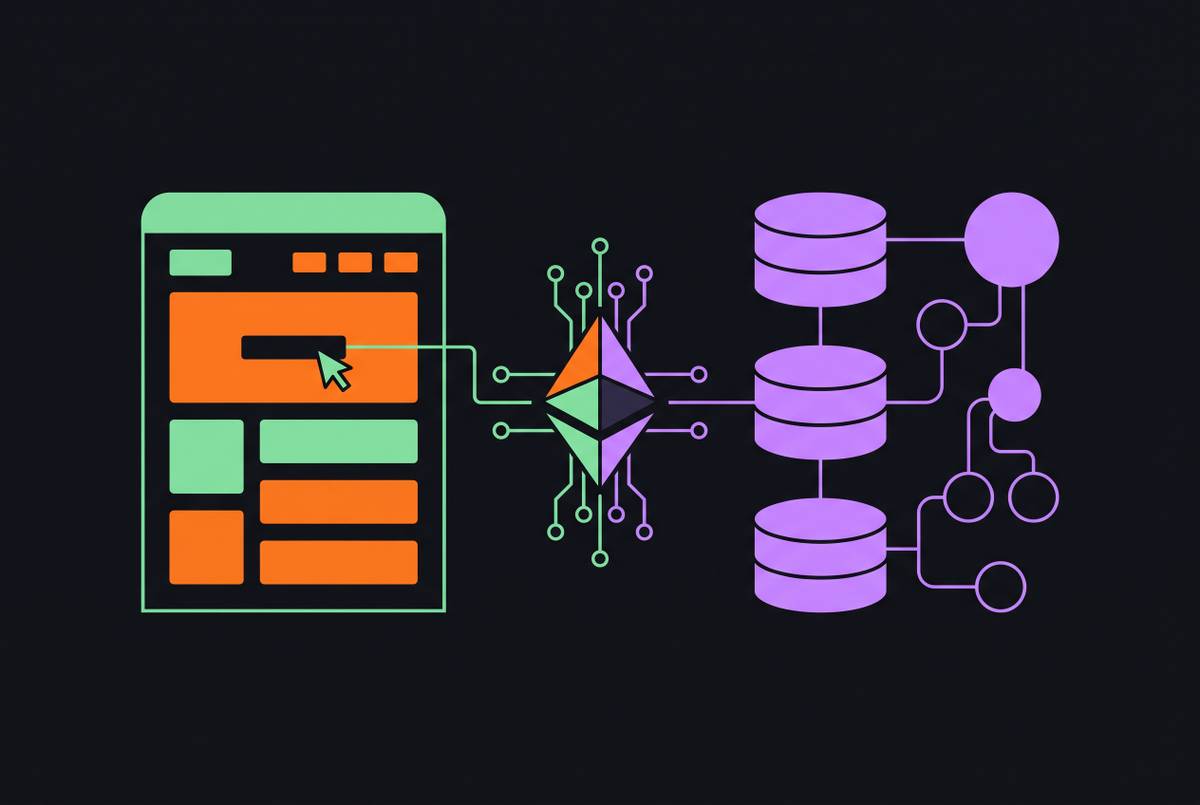
Open Source Coding Agents for Self-Hosted Environments
Auditability, data control, and vendor independence matter more than price in self-hosted agents.
Platform teams that choose open source, self-hosted coding agents aren't settling for a cheaper version of a hosted product. Four of those problems come up over and over: auditability, data sovereignty, model flexibility, and resilience against a vendor's own roadmap decisions.
Start with auditability. In finance, healthcare, insurance, and defense, "trust us" is not an answer a compliance team can accept. Open source agents expose the prompts, the tool calls, the file changes, the terminal output, and the logs behind every action. A closed hosted workflow usually can't offer that same level of visibility, because the internals aren't the customer's to see.
Data sovereignty runs deeper than most teams expect going in. Self-hosting the agent while still calling a hosted model API over the public internet closes part of the gap and leaves the rest open.
Vendor lock-in isn't a hypothetical either. Teams that built real workflows on top of those three tools are now dealing with the fallout, whether that means a frozen feature set or a migration project nobody budgeted for.
Open source doesn't make maintenance risk disappear. And model flexibility has a direct economic effect: a single-provider tool ties a team's cost structure to one lab's pricing changes and roadmap choices, while BYOK support and local inference let a team route each task to whichever model fits the budget and the job.
None of this comes free just because a tool is labeled open source. These benefits depend entirely on which project a team picks and how it gets deployed, and that's the question the rest of this piece works through.
What distinguishes open source self-hosted coding agents from proprietary alternatives
Self-hosted coding agents have moved well past the early experiment stage now. The current generation can take a goal, break it into steps, and carry out those steps with limited supervision: reading code, writing a fix, running the test suite, opening a pull request, and revising the work when something breaks.
Capability has genuinely advanced. Teams that set expectations based on a benchmark score, rather than a measured rollout, tend to be disappointed when they measure daily delivery throughput. That gap between lab conditions and shipping code is the first thing to plan around, not the last.
Operational complexity is the honest, unglamorous part of this story. Teams need to put real engineering headcount against that difference before rollout, not after the first incident.
Foundation governance is becoming a meaningful signal here too: a single-vendor repository can change its license terms in one commit, while a foundation-governed project can't do that quietly. That distinction matters the moment legal asks about relicensing risk.
Taken together, this is a category that's credible enough to build on, but only if a team evaluates it on the axes that actually predict production fit, not on star counts or demo footage.
The five axes that differentiate self-hosted agents
Five questions separate these tools in ways that matter once code is actually shipping, and they're the same questions that come up in security reviews and compliance audits.
Autonomy level is the first. Tools range from inline suggestions, to multi-file edits, to agents that take a task and hand back a finished pull request with no step-by-step review. The right point on that range depends on how much work a team actually wants to hand off versus check at each stage.
Model flexibility is the second. A single-provider tool creates concentration risk instead.
Data boundary is the third, and it has three separate parts: where the agent runtime executes, where the model inference happens, and where the integration layer touches other systems.
Deployment and operational surface is the fourth. A single binary installed per developer is a far smaller commitment than a control plane with agent backends, a database, and a queue behind it. Air-gapped environments raise the bar further: local or private inference, no phone-home behavior, and a dependency path that's been checked end to end.
Audit output and license and governance round out the list. Run logs, permission policies, and approval records are what make a tool defensible in a compliance review. A permissive open-source license keeps the core free of commercial restriction, and foundation governance lowers the odds of a surprise relicensing down the road.
OpenHands as the benchmark for fully autonomous self-hosted operation
OpenHands earns the clearest answer to what full autonomy looks like in this category through its architecture.
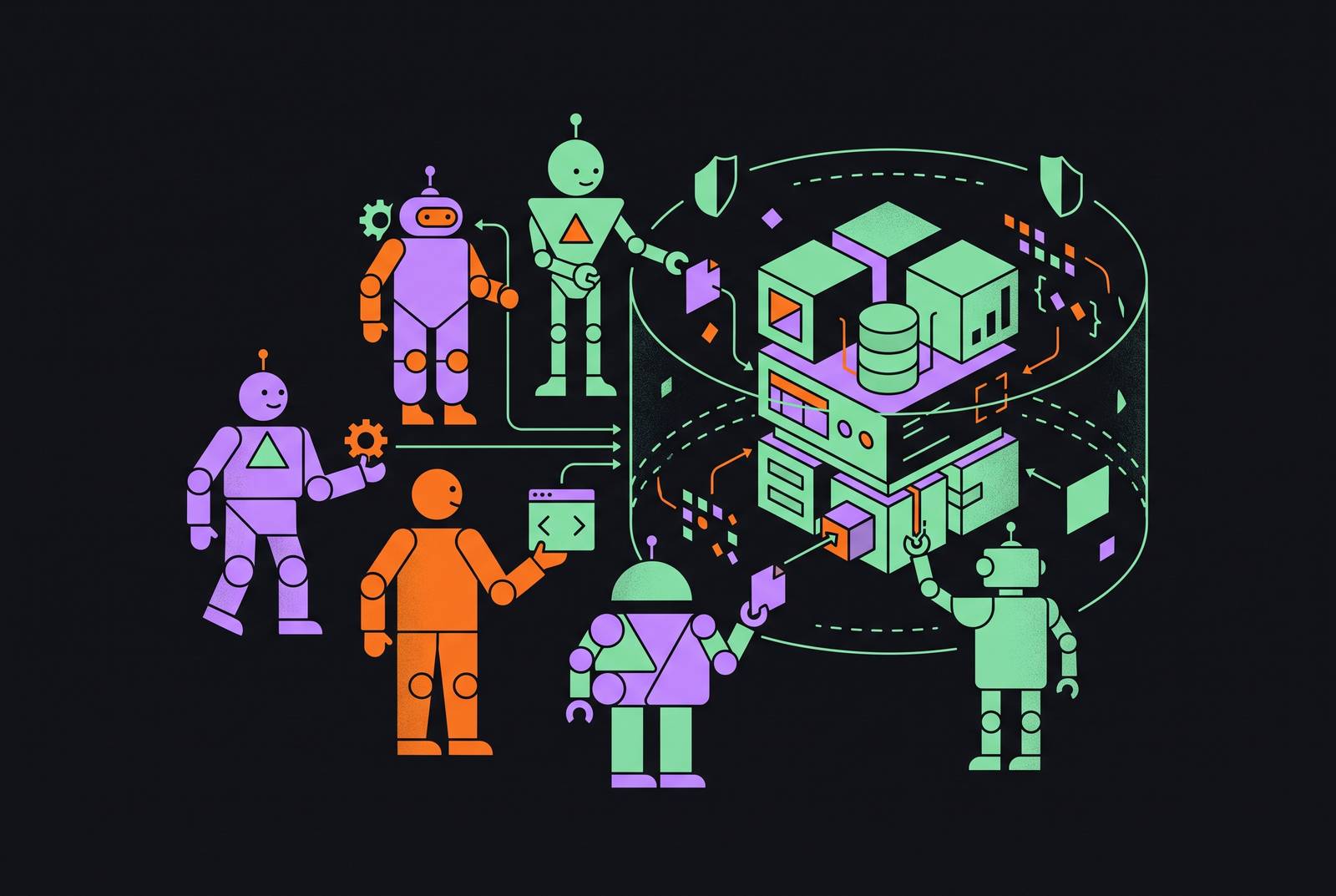
Every agent session runs inside an isolated Docker sandbox, with its own terminal, editor, and file system, and a browser available as an opt-in tool. On top of that, an event stream architecture logs every action and observation the agent takes, giving a compliance reviewer a complete trail of what happened and why. Multi-agent delegation is built in too: specialized sub-agents can split planning, coding, and browsing across a single task.
That capability comes at a real cost. Running OpenHands means operating a control plane, not just installing a CLI, and that control plane is the actual on-call surface a team signs up for. Token costs climb accordingly: multi-step autonomous agents burn through far more tokens than an inline completion tool ever would.
OpenCode as the highest-reach terminal agent for model-flexible teams
OpenCode takes a different trade: less operational overhead than a full control plane, in exchange for less structural audit depth than OpenHands provides.
It's terminal-first, with a desktop app currently in beta, and it installs through npm, Homebrew, Scoop, Chocolatey, pacman, Nix, or mise, so it fits into whatever install habits a team already has. Provider breadth is where OpenCode separates itself from the rest of the field: documented support covers Amazon Bedrock, Azure OpenAI, Google Vertex AI, GitHub Copilot, OpenRouter, Cloudflare AI Gateway, SAP AI Core, and Snowflake Cortex, plus local runtimes like Ollama, LM Studio, and llama.cpp, plus a custom-provider path, for more than 75 providers total.
Sessions are scriptable, so a task can be piped in from another tool or triggered as a step inside a build pipeline. Community momentum around the project is a sign of adoption, not a quality guarantee on its own.
Cline and Goose for teams whose workflows live in the IDE or on the desktop
Terminal-native tools aren't for everyone, and Cline and Goose both serve teams for whom the terminal isn't the natural home, without giving up the model flexibility and self-hosting properties that define this category.
Cline runs under the Apache 2.0 license and ships as an extension, a desktop app, a CLI, and an SDK. It's the most-installed open source agent for VS Code. It reads files, writes files, and runs commands, but it keeps a human in the loop for approval at each step, which is a deliberate feature for teams that want a checkpoint before code changes land, not a limitation to work around. The constraint is straightforward: Cline is tied to VS Code, so it's not the right pick for developers on other editors or working mainly in the terminal.
Goose takes the desktop-native route instead. It's written in Rust, ships as a native desktop app, a full CLI, and an embeddable API, and runs entirely on the local machine with no cloud instance required. It supports more than 25 model providers, including MCP support for connecting to external tools, databases, and services. Goose was originally built by Block, and on April 7, 2026, it moved to the Agentic AI Foundation at the Linux Foundation. That governance lineage matters for any team that treats relicensing risk as a real compliance concern, because a foundation-governed project can't quietly change its license terms the way a single-vendor repository can.
Between the two, Cline suits teams that want approval gates inside an existing VS Code workflow, and Goose suits teams that want an extensible, tool-connected agent running locally with governance history behind it.
Tabby and Aider for the strictest data residency and git-native requirements
Some teams have requirements that neither OpenHands, OpenCode, Cline, nor Goose fully satisfies: code that can never leave the network, or AI-driven edits that have to show up in the git log exactly like a human commit. Tabby and Aider are built around those two specific constraints.
Tabby is a dedicated inference server, not a client that calls out to someone else's API. It runs open-weight models such as StarCoder and CodeLlama directly on a team's own hardware, and it indexes private repositories locally so completions reflect the codebase's actual naming conventions instead of generic patterns pulled from public training data. That's the sharpest architectural line in this whole piece: no code needs to leave the network, because the boundary is built into how Tabby runs, not bolted on through policy. Tabby is primarily a code completion and chat server, not a fully autonomous agent, so teams that need end-to-end autonomous task execution will pair it with a separate agent layer on top. It's the clear fit for finance, healthcare, insurance, and defense teams whose actual requirement is self-hosted inference, not just a self-hosted agent runtime.
Aider solves a different problem. Released under Apache 2.0 as a terminal CLI, it edits code directly across a real git repository and creates commits as it goes, so every AI-driven change is tracked in ordinary git history and can be reviewed or reverted the same way a human commit would be. It fits teams whose primary review mechanism is git history, and developers who want AI-made edits to be indistinguishable in the log from their own. It's not built for a team that wants the agent planning and executing across many files with no step-by-step approval in between.
How autonomy level and deployment complexity interact
None of these six tools is the objectively best one. Fit comes from where a team sits on two axes at once: how much autonomous execution it's willing to hand off, and how much operational complexity it can actually sustain.
High autonomy paired with a high operational surface points to OpenHands, and it only makes sense when a team has the platform engineering capacity to run a control plane and genuinely needs a full audit trail. Medium autonomy inside an IDE points to Cline, for teams working primarily in VS Code that want human approval at each step. Git-native review inside a terminal points to Aider.
Air-gapped environments shrink this field further. The rest leave that validation work to the team adopting them.
Model selection as a production variable, not a setup choice
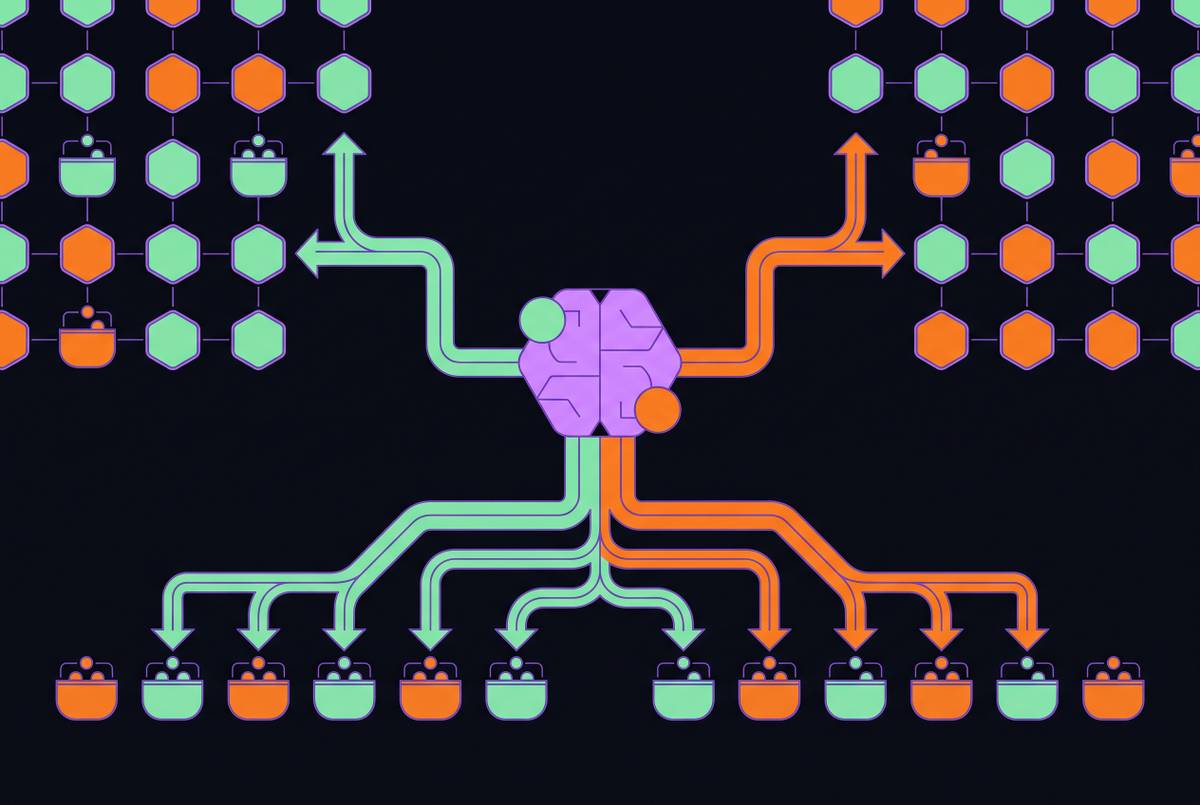
Every tool covered here is model-agnostic by design. The model attached to the agent is a production decision with its own cost, capability, and compliance consequences, not a box checked once during setup and forgotten.
Model flexibility is the main reason most teams pick open source over a proprietary tool. But "model-agnostic" written in a README and actually easy model switching in production are two different claims. What matters in practice is how many providers are genuinely documented, and whether switching between them takes a config change or a code change.
Cost catches teams off guard. Total AI tooling cost per engineer per month has grown past the older per-seat licensing estimates many teams still budget against now.
Local inference through Ollama, LM Studio, or llama.cpp closes the data boundary completely, since nothing leaves the machine, but it adds GPU provisioning and ongoing model management as new operational work. That trade-off matters most if you run air-gapped deployments or have a hard off-network requirement.
The practical question for any team isn't just which models an agent supports today, but whether its provider integration layer gets updated quickly enough to add new models as the frontier shifts.
AGENTS.md and the emerging standard for giving agents stable repository context
Across every tool in this piece, the main way a team makes an agent useful inside its specific codebase is a file called AGENTS.md, and how well a team maintains that file decides whether the agent behaves consistently or turns into an unpredictable liability.
The risk sitting inside that convenience is that AGENTS.md is a prompt-injection surface. Real security guarantees have to come from permissions, hooks, CI, or infrastructure, because natural-language instructions in AGENTS.md alone can be overridden by a prompt crafted well enough to do it.
Treat the file as code: update it in the same pull request that changes whatever convention it describes, so it never drifts out of sync with the repository it's supposed to represent. And the emerging consensus among teams running these tools in production is that orchestration beats raw autonomy. A practical rollout usually starts agents on tests and small bug fixes, moves to low-risk refactors, then to dependency updates and documentation syncing, and only later to cross-module feature work.
Integrating self-hosted agents into CI/CD, GitHub, and existing engineering workflows
Most of the value in these tools appears once an agent is embedded into the pipelines and review steps where engineering work already happens.
Terminal agents like OpenCode and Aider fit naturally into shell and git workflows with the smallest footprint of any tool covered here, which makes them a strong match for teams whose CI is already script-driven, since the agent becomes just one more scriptable step in a process that already exists.
A real operational problem occurs when teams run several different agents across their stack: one for CI, another inside the IDE, another in the terminal, another reviewing GitHub pull requests. Without a shared instruction layer, such as AGENTS.md or an equivalent, each of those agents becomes its own separate governance problem, with no shared understanding of the repository's conventions.
On the question of which tasks should run unsupervised, the GAIE framework's graduated oversight model offers a useful structure. Platform teams that build their own integration layer can adapt that same classification logic to their own risk tiers.
A realistic evaluation process before committing to a self-hosted agent
A serious evaluation tests the things that actually matter in production: data boundary, operational surface, audit output, and model switching. It does not test which demo looks the smoothest.
Figure out the data boundary first. Figure out whether the actual requirement is a self-hosted agent runtime, which most of the tools in this piece satisfy, or self-hosted inference, which only Tabby and local-inference setups genuinely satisfy. Conflating those two is the single most common mistake teams make during evaluation.
Run the agent against a representative task and trace exactly where model-generated commands execute, and what boundary actually stops them from touching live systems. Then run a model-switching test before committing to anything: change the provider in the config and confirm the agent still behaves correctly. That single test reveals whether "model-agnostic" is a real architectural property or just a line in the documentation.
A graduated rollout is the established way to de-risk all of this. And model the token cost at scale before rollout, not after, since agentic multi-step runs cost substantially more per task than inline completion does, and that gap compounds fast once it's multiplied across an entire engineering team.