CI/CD Tool Evaluation for Agentic Engineering Teams
Agents iterate dozens of times per commit, making pipeline speed the real bottleneck.
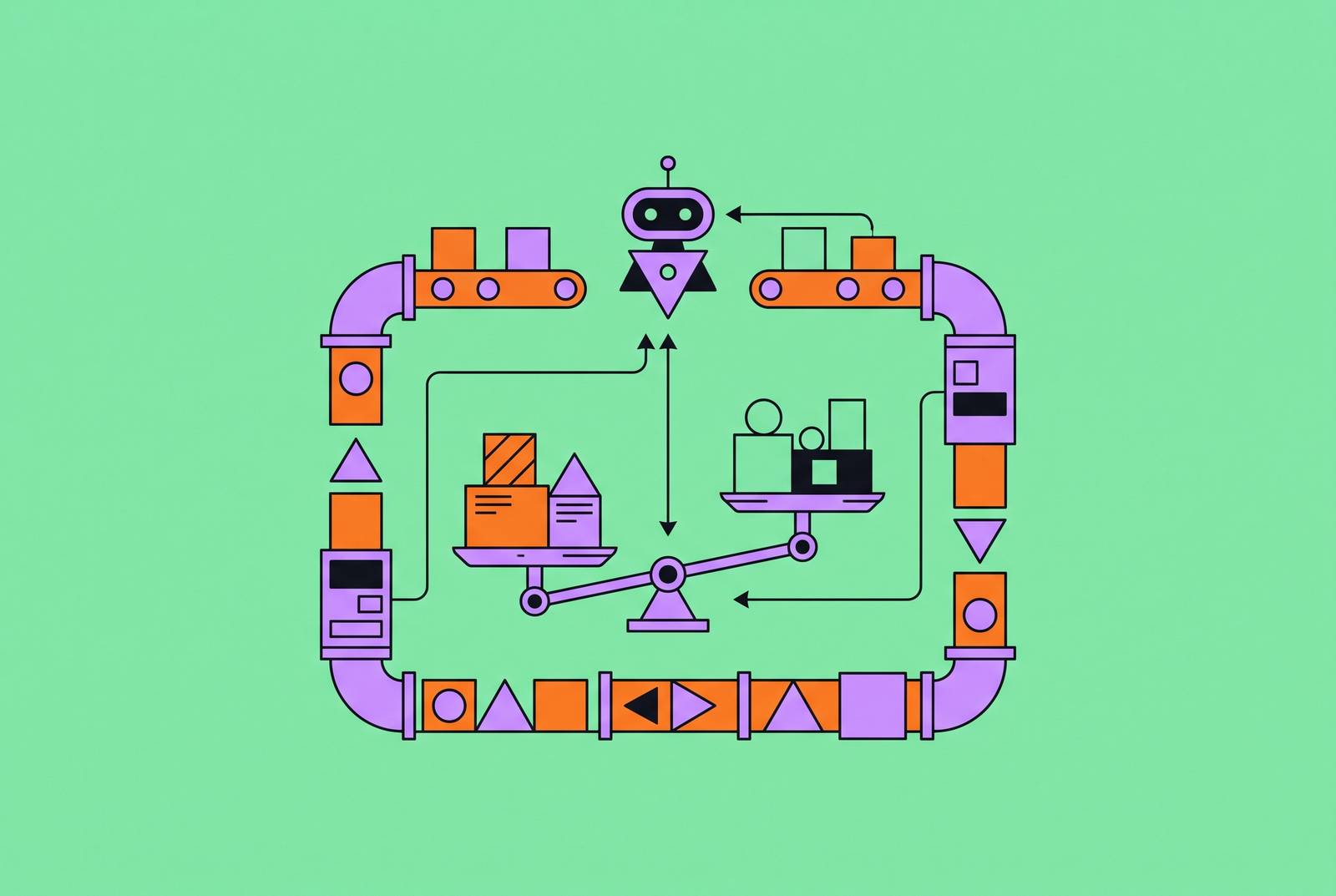
CI/CD tools were built to keep pace with people. People commit code a few times a day, take coffee breaks, sleep at night. Agents don't do any of that. They plan, write, test, fail, fix, and resubmit in tight loops that can run dozens of times before a pull request ever reaches a human reviewer. That changes what a pipeline needs to do, and it changes what counts as "good" when picking one.
Most checklists for CI/CD tools still ask about pipeline speed, uptime, plugin count, and cost per build minute. Fine questions for a human commit cadence. Wrong questions once agents are writing and testing code on their own, in bursts, at 3 a.m., across multiple sub-agents working at once. At that point the pipeline stops pacing developers and starts pacing the AI itself. Most vendors are still selling for the old pace, and most buyers are still grading on it too.
Forrester's State of Agentic Software Development report (2026) found that teams applying AI narrowly, just to the coding step, without touching anything downstream, saw overall team productivity rise by only a modest amount. The bottleneck doesn't disappear. It moves into CI/CD and QA. The same pattern shows up elsewhere: the time saved writing code gets spent right back auditing what the AI wrote. Call it the verification tax. A slow, opaque pipeline doesn't just fail to help here. It makes the tax worse.
So the real question isn't "is this CI/CD tool good?" It's "good for what, and for whom?" A tool that worked fine for a five-person team shipping twice a day can turn into a hard ceiling on how fast agents actually work. The tools that matter in two years won't be the ones with the nicest dashboard. They'll be the ones built around API-first control and machine-readable feedback. The rest of this piece rebuilds the evaluation criteria from the agent's point of view, not the developer's.
What agents actually demand from a pipeline at runtime
An agent isn't a user who submits a job and wanders off for coffee. It's a loop: act, watch for a signal, react, repeat. Any delay in that loop doesn't just slow one step. It slows every step after it, dozens of times over, inside a single task.
A few things follow from that:
- Parallelism: modern agent setups often split a job across a planner agent, several coding agents, and testing agents, all running at once. The pipeline needs to fan out many runs at the same time without making them wait in line.
- Long sessions: per Anthropic's 2026 Agentic Coding Trends Report, tasks that used to take a person hours or days can now run with very little hands-on supervision. That means pipelines need to support sessions lasting minutes, hours, sometimes multiple days, with checkpoints and recovery built in, not just short one-shot builds.
- Programmatic control: agents need to trigger a run, check on it, cancel it, and re-trigger it, all through an API or command line. A tool built mainly around a nice web dashboard is a mismatch, because the agent never opens a browser.
- Structured feedback: agents act on test results, lint errors, and build logs directly. They need that information in a form they can parse, like JSON or a structured test report, not a paragraph written for a human to skim.
- Scoped permissions and logging: agents need clear boundaries on what they're allowed to touch, and every action needs a record a person can review later. CodeRabbit's agentic SDLC guide names governance, meaning scoped access, role-based controls, and auditable guardrails, as one of four core capabilities the agentic software development lifecycle depends on.
- Sandbox isolation: when an agent is making changes to code or infrastructure on its own, a bad run shouldn't leak into shared systems or corrupt state other agents depend on.
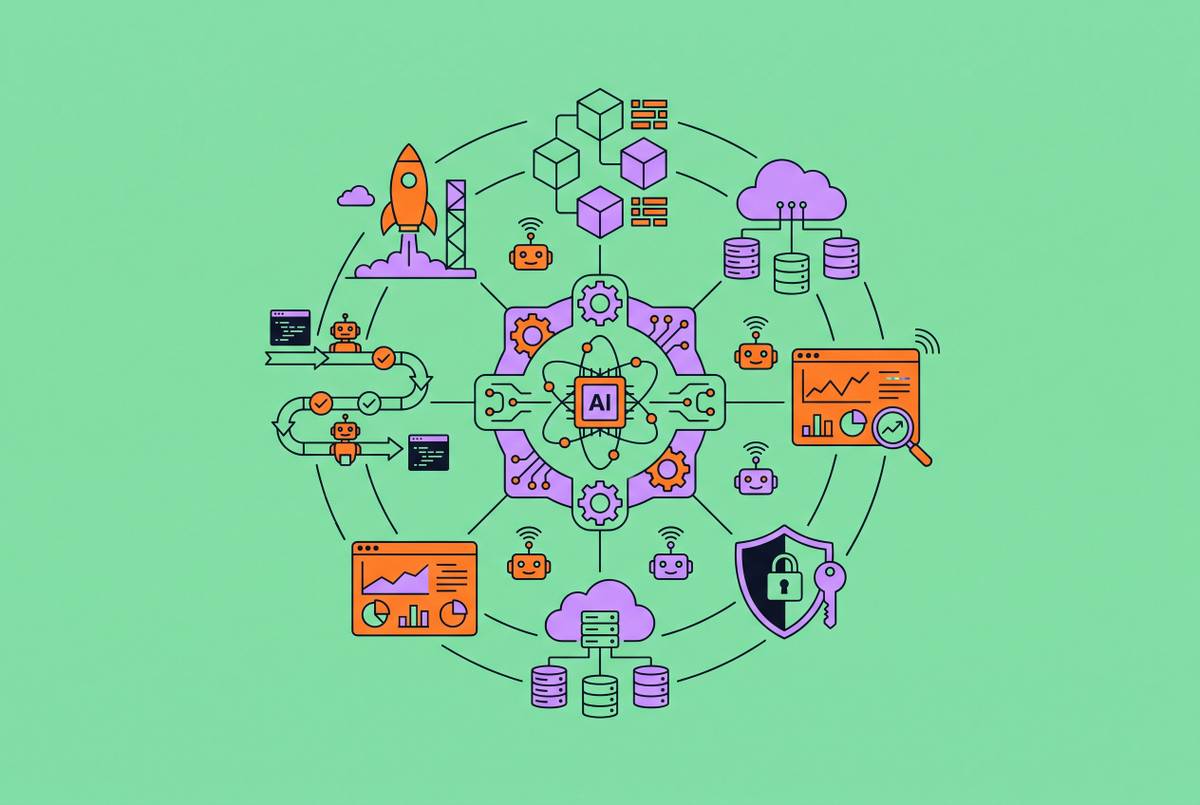
Those demands sort into five buckets: feedback latency, parallelism, programmatic control, observability, and governance. That's the frame the rest of this piece uses.
Feedback latency and how it compounds across agent iteration loops
When a person opens a pull request, a ten-minute pipeline barely registers. They switch tabs, answer a Slack message, come back later. The wait is invisible.
An agent stuck in a debugging loop doesn't get that luxury. It submits a fix, waits for the signal, reads the result, submits again. The pipeline's delay sits directly inside the loop, not off to the side.
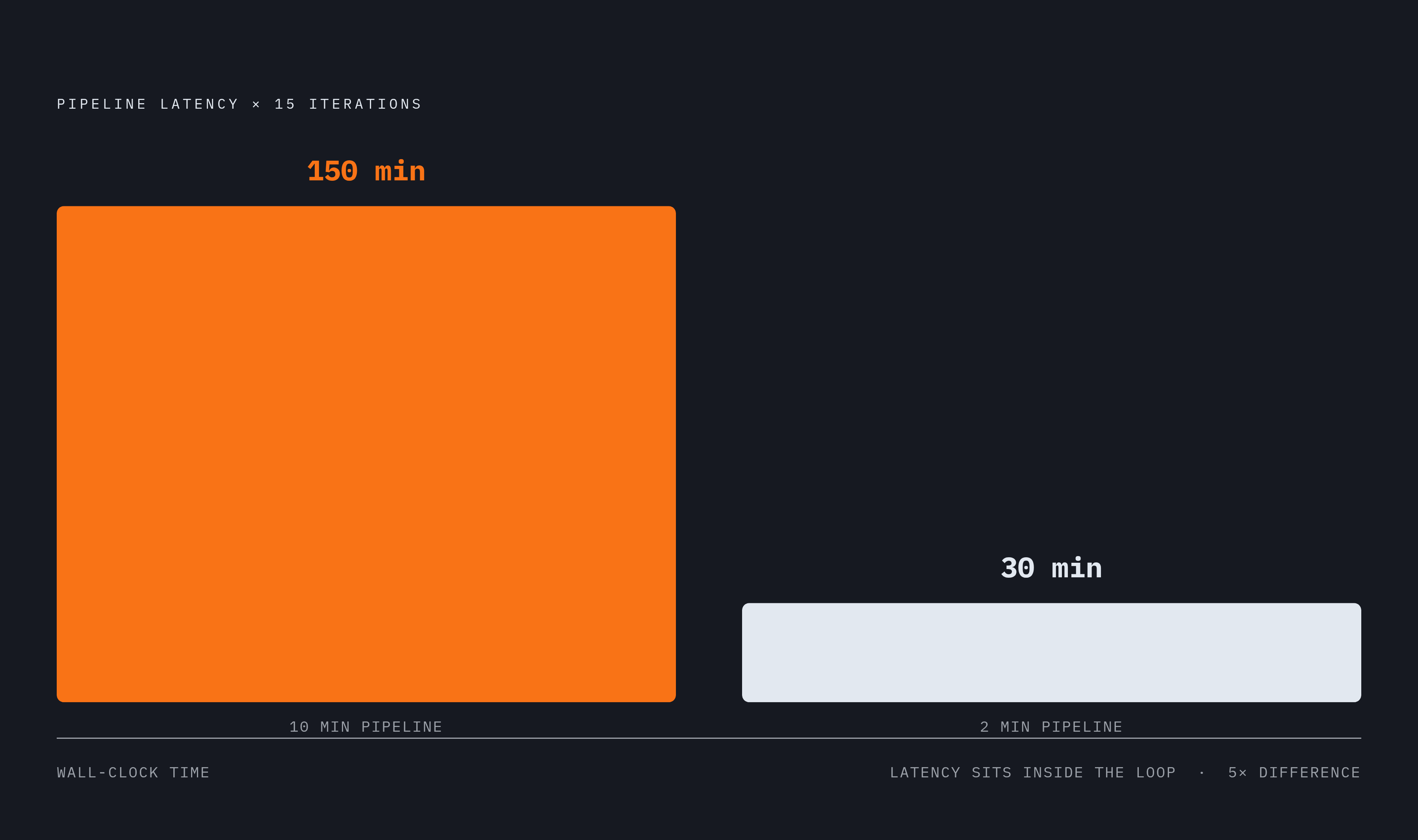
Do the math and it gets uncomfortable fast. A task that takes 15 agent iterations through a 10-minute pipeline burns 150 minutes of wall-clock time. Cut that pipeline to 2 minutes, and the same task costs 30 minutes. That gap is the difference between shipping a feature today or shipping it tomorrow.
What actually matters here, when judging a CI/CD tool:
- Time to the first useful signal on a failed test, not just total build time
- Whether the tool can run only the tests affected by a change, instead of the full suite every single time
- How queue depth behaves when a burst of commits hits at once, since agents can generate far more commits per hour than people do
- How long it takes an ephemeral runner to spin up cold
Anthropic's 2026 report notes that teams who get good at coordinating agents across the software lifecycle can ship features in hours instead of days. That kind of speed only happens if the pipeline's feedback loop is measured in minutes, not tens of minutes.
Here's a useful exercise for any team: take the pipeline's slower-end feedback time (the 95th percentile, not the average) and multiply it by a realistic agent iteration count for a common task. That number is roughly the ceiling on how fast agentic work can move, no matter how good the agents get. If that number comes out in hours, no amount of agent skill fixes it. The pipeline is the bottleneck, full stop. And that's the part most teams get backwards: they spend months tuning agent prompts and picking the "smarter" model, when the pipeline sitting underneath is quietly capping every gain before it happens.
Parallelism architecture and what "concurrent runs" actually means at scale
A single instruction like "add rate limiting to the API gateway" doesn't stay single for long. A planner agent might split it into pieces and hand them to separate coding, testing, and reviewing agents, all working on different modules at the same time. One request can turn into dozens of pipeline runs firing off together.
Most CI/CD tools list a "max concurrent jobs" number on their pricing page. Ignore it. That number matters less than what's behind it:
- Elastic compute: can the platform spin up new runners on demand to absorb a burst, or does everything queue against a fixed pool of machines?
- Isolation: are parallel runs kept fully separate, or do they share caches, artifact storage, or a database in a way that could let one run quietly corrupt another?
- Dependency graphs: can the pipeline understand that integration tests should only run after every module build finishes, or does it force everything into one straight-line sequence?
- Fan-out and fan-in: can the platform natively spawn a batch of parallel jobs and collect their results, or does that need custom scripting glued on top?
The agentic SDLC framing makes this clear: complex problems get solved by specialized sub-agents working together, a planner, a coder, a tester, a reviewer, each doing its part. A pipeline that flattens that structure into one long queue is fighting how these systems actually work. That's the trap the marketing hides: a big number on a pricing page means nothing if every one of those jobs is fighting over the same shared cache.
Programmatic control: evaluating CI/CD tools as infrastructure agents will call
Traditional CI/CD reviews spend a lot of time on developer experience: is the YAML clean, does the dashboard look nice. None of that matters to an agent, because an agent never opens the dashboard. Judging a CI/CD tool on its UI, when the primary user is about to be a script, is like judging a car on its cup holders when the buyer is a delivery drone.
What an agent actually needs from a CI/CD API:
- The ability to trigger a run with custom parameters (branch, environment, config overrides), not just automatically on a push or pull request
- Structured status updates it can poll for or subscribe to (JSON, for example), not just a webhook that pings a URL
- The ability to cancel a run early once it's already failed a key check, instead of waiting for the whole thing to finish
- Fine-grained access to results: individual test case outcomes, coverage changes, lint warnings, not just a single pass or fail flag
- The ability to re-run just the stage that failed, without repeating stages that already passed
A first-class command-line interface matters here too, since a lot of agent tooling (Claude Code, Codex, and similar tools) lives in the terminal, not the browser. Cursor, an AI-powered IDE for software teams, is one environment built around that assumption, with CLI and GitHub integrations that let agents drive pipeline interactions without touching a web UI.
GitHub's Copilot cloud agent integration, announced August 21, 2026 alongside Slack and Microsoft Teams support, is a useful reference point. Work can start from a Slack message, run asynchronously in a secure cloud sandbox, and post results back once it's done. The agent drives the pipeline interaction from end to end. The developer isn't clicking through a UI at any point in that chain.
A good test for any team: pick the five most common agent tasks in the codebase, and trace every pipeline interaction each one requires. If any step still needs a human to open the CI/CD web interface, that's a gap. Worth asking why that gap exists before buying the tool that has it.
Observability for agent-generated failures - why standard build logs aren't enough
AI-written code doesn't fail the same way human-written code does. GitClear's 2024 data shows code churn rising sharply from the 2021 pre-AI baseline, with projections pointing toward a doubling. Research puts AI-generated pull requests at roughly 1.7 times more issues than human-written ones. Agents need richer feedback to fix their own mistakes, because there's more to fix.
A log line reading "test suite failed" works fine for a person, who can open the code and reason about what went wrong. An agent needs something it can parse directly, without a human translating first.
What that looks like in practice:
- Structured test results: individual test names, failure messages, and stack traces in a machine-readable format like JUnit XML or JSON, not just a count of passes and failures
- Diff-aware reporting that ties a failure back to the specific lines or files the agent just changed
- Flakiness detection: agents need a way to tell a real regression apart from a flaky test, or they'll loop forever chasing a false signal
- Security scan results surfaced directly in the pipeline as structured output. Research cited on AI-generated code puts vulnerability rates somewhere between 40% and 62%, which makes automated SAST and DAST output too important to bury in an archived file
- Coverage delta reporting, so an agent knows whether the tests it just wrote actually cover the code it just changed
Addy Osmani has described this as the 80% problem: agents generate most of a solution fast, and the remaining slice hides costs that compound quietly over time. A pipeline that only reports pass/fail is blind to exactly that slice. Good observability is what surfaces the hidden 20% before it reaches production, not after.
The evaluation question worth asking: can the pipeline give an agent enough structured signal to diagnose and fix a failure on its own, without a person reading the log first? If the answer is no, the agent isn't actually autonomous. It's just fast until it hits a wall, then it waits for a human anyway, which defeats half the point of running it.
Governance, auditability, and the permission model agents operate within
An agent that can trigger deployments, change infrastructure config, and merge code without anyone at the keyboard is a new kind of trust surface. CI/CD tools were never built with that actor in mind, and pretending otherwise is where most governance failures start.
CodeRabbit's agentic SDLC guide lists what enterprise teams actually need: scoped access, role-based controls, and auditable guardrails. In concrete terms: control over which repositories an agent can touch, which tools it's allowed to call, and a full log of everything it did.
Augment Code's research on the AI software development lifecycle (drawing on Microsoft's framing of agentic maturity) describes a four-stage model. Stage four represents the most mature level of agentic autonomy, where governance infrastructure, not just tooling, determines what agents are permitted to do. Most teams aren't there yet, and getting there takes real governance infrastructure, not a tool with the right feature checkbox ticked on a sales page.
Things worth checking when evaluating a platform on this front:
- Per-agent identity: does each agent get its own scoped identity, or do they all share one service account, making it impossible to tell which agent did what?
- Human approval gates: can a human be required to sign off before an agent-triggered action crosses from staging into production?
- Immutable audit logs: does every agent action produce a tamper-evident record, showing who, what, when, and on which branch or environment?
- Policy as code: are the governance rules themselves stored in version control, so they can be reviewed and audited like any other change?
- Administrator overrides: GitHub's August 21, 2026 Microsoft Teams Copilot integration lets a repository administrator require extra human approval for any pull request attributed to that Copilot identity. That kind of override should be standard, not something a team has to bolt on by hand.
A large share of companies planning to deploy AI agents (a large share of estimates put it at a substantial majority) have found their existing security tools were never built with autonomous code execution in mind. CI/CD governance has the same blind spot. It was built for human actors, and agents don't fit the mold cleanly, no matter how many permission checkboxes get added after the fact.
Where leading CI/CD platforms stand against these criteria today
Judge these platforms on the five dimensions above, feedback latency, parallelism, programmatic control, observability, and governance, not on general popularity or their old feature lists.
GitHub Actions
- Home turf for GitHub Copilot's cloud agent integration, announced May 19, 2025, so agent-to-pipeline coordination is built in rather than bolted on afterward
- Repository administrators can require human approval for agent-created pull requests, a governance pattern built specifically with agentic actors in mind
- GitHub-hosted runners scale up automatically; matrix builds support running jobs in parallel; the REST API covers most of what programmatic control requires (there's no GraphQL API support for managing Actions, a real gap for teams that prefer that style)
- Weaker on observability: structured test result reporting depends on third-party actions, and there's no built-in flakiness detection
- Best fit for teams already living on GitHub, especially where the agents in use (Copilot, Codex, or similar) already operate inside GitHub's surface
GitLab CI/CD
- Native support for directed acyclic graph (DAG) pipelines, which models complex dependency chains well, a good match for fan-out and fan-in structures across multiple agents
- A full REST API, pipeline triggers that accept custom variables, and per-job artifact scoping that keeps parallel runs isolated
- Built-in SAST and DAST scanning that surfaces as structured pipeline output, directly addressing the security observability gap agents run into
- Self-managed runners give enterprises real control over compute isolation, useful for sandboxing agent work
- Protected environments with required approvals give teams a governance gate before anything reaches production
CircleCI
- Dynamic configuration, where the pipeline config is generated at runtime, lets agents shape the pipeline programmatically to fit the task at hand, a real advantage given how much agent workloads vary
- Resource class selection per job means teams can balance cost and speed across a mix of light and heavy agent tasks
- Mature test splitting and parallelism tools, plus built-in flaky test detection, directly answering one of the harder observability problems
- Strong API depth for triggering and checking on runs, with pipeline parameters that support agent-driven configuration
None of these three was built from scratch for agents. All three are visibly adapting, some faster than others. GitHub wins on native agent integration but lags on observability. GitLab wins on governance and dependency modeling but asks more setup work up front. CircleCI wins on parallelism maturity but its agent-specific hooks are thinner than GitHub's. Pick based on which gap the team can least afford, because none of the three closes all of them yet.
Sources
- A guide to the agentic software development lifecycle (SDLC)
- Agentic Software Development Takes The Lead: From Code Assistants To Orchestrated SDLC Agents
- resources.anthropic.com
- Agentic Development: What It Means for Engineering Infrastructure in 2026 | Bunnyshell
- CI/CD for AI Agents: How to Integrate Agent Orchestration into Your Pipeline